

How the 2025 Toyota Tacoma’s New Powertrain Changes Its Maintenance Needs
Last week, a 2024 Tacoma with the new hybrid powertrain came in with a hybrid system warning at just 12,000 miles. The owner had been taking it to a quick-lube shop that used conventional oil instead of the 0W-16 synthetic the hybrid system requires. The incorrect oil viscosity affected the engine’s ability to seamlessly transition between gas and electric power, triggering protective mode. The complete oil system flush and correct refill cost $340. The proper synthetic oil changes they should have been doing? Just $95 every 10,000 miles, totaling $190 over the same period.
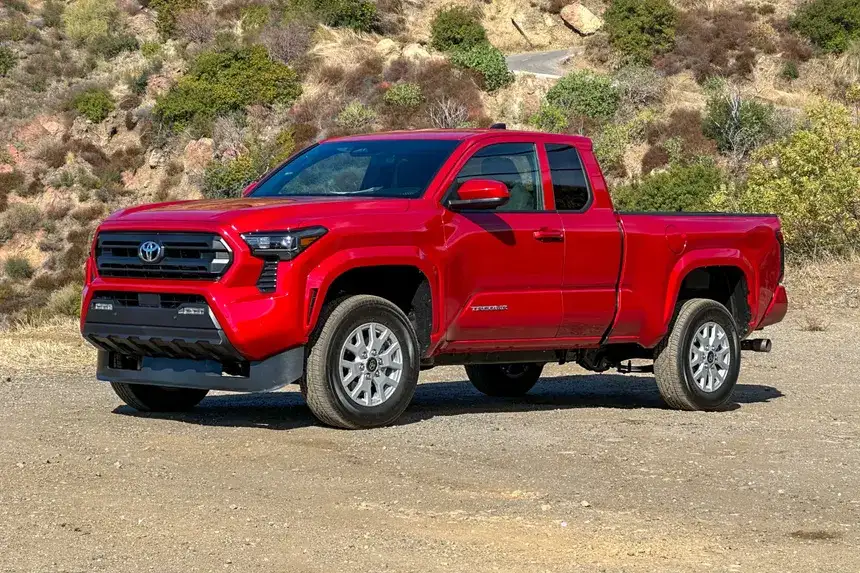
Your 2025 Toyota Tacoma isn’t just an updated version of the previous generation. It’s a completely redesigned truck with an all-new turbocharged four-cylinder engine replacing the legendary V6, an available hybrid powertrain that’s a first for Tacoma, and transmission technology that fundamentally changes how this truck operates.
Here’s what catches most new Tacoma owners completely off guard: the maintenance schedule that kept your 2023 or earlier Tacoma running for 200,000+ miles doesn’t apply to your 2025. The new powertrain requires different fluids, different intervals, and additional maintenance procedures that didn’t exist on previous models.
This matters especially in Cleveland Heights, where our four-season weather creates unique maintenance challenges. The road salt exposure through winter, temperature extremes from sub-zero mornings to humid summer days, and the freeze-thaw cycles all affect how your redesigned Tacoma needs to be maintained.
What Actually Changed Under the Hood
Your 2025 Tacoma features a 2.4-liter turbocharged four-cylinder engine that produces 278 horsepower, replacing the 3.5-liter V6 from previous generations. This isn’t just a smaller engine. It’s a fundamentally different design with a turbocharger, direct and port fuel injection, and an 8-speed automatic transmission that replaces the previous 6-speed.
If you opted for a hybrid model, you have the i-FORCE MAX system that combines the turbocharged engine with an electric motor integrated into the transmission. This hybrid system adds a battery pack, power control unit, and complex cooling system that previous Tacomas never had. Each of these components requires specific maintenance that didn’t exist before.
The turbocharged engine operates at higher cylinder pressures and temperatures than the naturally-aspirated V6 it replaced. Your turbocharger spins at over 170,000 RPM and depends entirely on engine oil for cooling and lubrication. When oil ages beyond its service life or drops below proper levels, the turbo experiences accelerated wear that leads to failures costing $3,500-4,200 to repair.
Your new 8-speed transmission uses different fluid than the previous 6-speed, operates at different pressures, and requires service at intervals that don’t match what older Tacoma owners are accustomed to. The transmission fluid specification changed, the filter design changed, and the service procedure changed. Following old information leads to inadequate maintenance.
An early adopter brought his hybrid Tacoma to us last fall after noticing reduced fuel economy and occasional roughness during the transition between electric and gas power. He’d been following advice from online forums based on previous Tacoma generations, including using conventional 5W-30 oil instead of the required 0W-16 synthetic. At just 18,000 miles, the hybrid system showed stress from improper lubrication during the critical moments when the engine starts and stops automatically.
His situation breakdown:
- Following outdated Tacoma maintenance advice for 18,000 miles
- Three oil changes with wrong viscosity: inadequate hybrid protection
- Hybrid system stress from improper oil: developing wear patterns
- Reduced fuel economy from system inefficiency: approximately $180 in wasted fuel
- Corrective service and monitoring: $420
What 2025-specific maintenance requires:
- 0W-16 full synthetic oil every 10,000 miles: $95 per service
- Two services over same period: $190
- Smart total: $190 prevents $600 in consequences and wear
The Service Schedule for Your New Tacoma
Your 2025 Tacoma follows Toyota’s revised maintenance schedule with significantly different intervals than previous generations. The turbocharged engine and hybrid system require specific attention that goes beyond traditional truck maintenance.
Every 10,000 miles or 12 months, your Tacoma requires oil and filter service using 0W-16 full synthetic oil. This ultra-low viscosity oil is critical for fuel economy, emissions compliance, and proper hybrid system function if equipped. Using thicker oil like 5W-30, even if it’s synthetic, increases friction that affects performance and fuel economy while stressing the hybrid system during start-stop operation.
“The most common mistake we’re seeing with 2025 Tacomas is owners treating them like the bulletproof V6 models,” says James Mitchell, Master Technician at our Mayfield Road location. “They think ‘it’s a Tacoma, it’s tough, I can stretch maintenance.’ But the turbocharged engine and hybrid system require precision care. Skip an oil change or use wrong fluid, and you’re gambling with expensive components that previous Tacomas didn’t have.”
At each 10,000-mile service, technicians must inspect your turbocharger oil lines and connections for leaks or restrictions. This inspection point didn’t exist on previous Tacomas but is critical for the 2025. We’ve found small oil leaks on turbo feed lines that would have progressed to complete turbo failure if not caught early.
For hybrid models, every oil service includes hybrid system inspection covering the battery cooling system, power cables, and inverter cooling loop. The hybrid battery has its own cooling circuit that uses coolant to maintain optimal temperature. This system requires inspection at every service interval to prevent overheating that degrades battery life.
Every 20,000 miles brings tire rotation, brake inspection, and cabin air filter replacement. The hybrid’s regenerative braking system means brake pads last longer than traditional trucks, but the brake fluid experiences different stress patterns. Moisture accumulation from less frequent brake use requires attention that hybrid drivers often overlook.
At 30,000 miles, your Tacoma needs its first major service including engine air filter replacement, differential fluid inspection, and transfer case fluid check if equipped with four-wheel drive. The 8-speed transmission requires fluid inspection at this interval, with service likely needed by 60,000 miles depending on driving conditions.
Every 60,000 miles, transmission fluid service becomes mandatory regardless of driving conditions. The 8-speed uses ATF WS (World Standard) fluid that maintains specific friction properties. Using universal ATF or “compatible” alternatives damages the transmission’s sophisticated clutch packs and valve body. We’ve seen 80,000-mile transmissions fail from using wrong fluid at 60,000-mile service.
The Hybrid System Maintenance Nobody Explains
If you have the i-FORCE MAX hybrid Tacoma, you’re maintaining a completely different vehicle than traditional trucks. The hybrid system adds complexity that requires specific attention most truck owners never considered necessary. Understanding these requirements separates owners who get 200,000+ trouble-free miles from those facing expensive repairs.
Your hybrid battery pack has its own cooling system that circulates coolant to maintain optimal operating temperature. This cooling system has different maintenance requirements than your engine cooling system. The hybrid coolant requires inspection every 10,000 miles and full service every 100,000 miles or 10 years, whichever comes first.
The power control unit manages the flow of electricity between the battery, electric motor, and engine. This component generates significant heat during operation and relies on coolant for temperature control. Any coolant system degradation affects hybrid performance and can trigger protective mode that reduces power and fuel economy.
A hybrid Tacoma owner came to us last summer after experiencing reduced electric-only range and increased engine run time. His truck would barely run on electric power alone, defaulting to gas engine operation even in situations where electric should handle the load. During inspection, we found the hybrid battery cooling fans clogged with debris and the coolant level slightly low. The restricted cooling forced the system to limit battery usage to prevent overheating.
His situation breakdown:
- Neglected hybrid cooling system inspection for 22,000 miles
- Clogged cooling fans restricting airflow: battery protection mode active
- Lost fuel economy from reduced electric operation: approximately $340 in extra fuel costs
- Cooling system service and fan cleaning: $280
- Total consequence: $620 in costs plus reduced hybrid benefit
What hybrid maintenance requires:
- Regular inspection of hybrid cooling components: included in services
- Keep cooling fans and vents clear: owner responsibility between services
- Smart total: Minimal cost maintains full hybrid efficiency
The regenerative braking system affects your brake maintenance needs. The electric motor provides most braking during normal stops, which means brake pads and rotors wear much slower than traditional trucks. However, the brake fluid experiences unique stress patterns. The system still requires full hydraulic pressure for emergency stops, but sees less frequent use, which can allow moisture accumulation that traditional heavy brake use would normally evaporate.
Your hybrid system requires software updates more frequently than traditional trucks. Toyota regularly releases updates that improve battery management, optimize the transition between gas and electric power, and refine regenerative braking feel. These updates should be checked during every service visit to ensure your hybrid operates with the latest improvements.
What Ohio Weather Does to Your New Tacoma
Your 2025 Tacoma faces maintenance challenges from our four-season climate that affect both traditional and hybrid components. Winter road salt is corrosive to brake lines, fuel lines, and the vulnerable hybrid components mounted underneath the truck. The hybrid battery pack, power cables, and cooling lines all face salt exposure that previous Tacomas never experienced.
The freeze-thaw cycles from December through March create constant expansion and contraction in every fluid, seal, and gasket. Your ultra-low viscosity 0W-16 oil is specifically designed to flow in extreme cold, but only when it’s fresh. As oil ages, its cold-flow properties degrade, creating harder cold starts and increased wear until the engine reaches operating temperature.
A Tacoma owner came to us last February after experiencing a check engine light during a cold snap when temperatures dropped to 5 degrees. During diagnosis, we found the turbocharger wastegate actuator had frozen from moisture accumulation. The owner had extended oil changes to 12,000 miles, and the degraded oil wasn’t providing adequate protection during cold starts. The moisture that should have been evaporated by proper lubrication instead froze in the wastegate mechanism.
Temperature extremes stress your hybrid battery more than moderate climates. Batteries lose capacity in extreme cold and degrade faster in extreme heat. Ohio’s summer heat combined with winter cold creates year-round battery stress that requires vigilant cooling system maintenance to protect your expensive battery pack.
Summer humidity affects your truck differently than previous generations. The turbocharged engine with its intercooler system is more sensitive to heat soak than naturally-aspirated engines. When you park after driving on a hot day, residual heat can stress turbocharger components if oil quality has degraded. Fresh oil with proper additives helps dissipate this heat safely.
Stop-and-go traffic around University Circle, downtown Cleveland, or during rush hour on I-271 creates the worst conditions for turbocharged engines. Constant acceleration and deceleration means your turbo is spinning up and down repeatedly, generating heat and relying on oil to cool and lubricate through these rapid cycles. Extended oil change intervals under these conditions accelerate turbo wear dramatically.
Warning Signs Your 2025 Tacoma Needs Attention
Your new Tacoma’s sophisticated electronics often mask developing problems until they become serious. The engine management system continuously adjusts boost pressure, fuel delivery, and hybrid power distribution to maintain smooth operation even as components degrade. By the time you notice performance changes, the underlying issue is usually well advanced.
Watch for any unusual sounds from the engine bay during acceleration or under load. A whistling or whining sound that wasn’t there before indicates developing turbocharger bearing wear or boost leak. This is your early warning before the turbo develops shaft play and starts consuming oil or losing boost pressure that costs thousands to repair.
For hybrid models, pay attention to how smoothly the truck transitions between electric and gas power. The transition should be nearly imperceptible under normal driving. If you feel hesitation, roughness, or hear the engine during transitions that were previously silent, your hybrid system may need attention. This often indicates oil viscosity issues, battery cooling problems, or developing hybrid component wear.
Monitor your fuel economy carefully. The turbocharged Tacoma should average 22-24 MPG in combined driving. The hybrid i-FORCE MAX should achieve 24-26 MPG combined. If your numbers drop by more than 2 MPG without obvious cause like winter fuel blends or heavy loads, something needs investigation. Often it’s spark plugs, air filters, or turbo efficiency loss from carbon buildup.
Watch for any dashboard warnings, even brief ones that clear themselves. Your Tacoma stores diagnostic codes that reveal what happened. A momentary turbo boost deviation code might indicate developing wastegate issues. A hybrid system fault code could show battery cooling problems or motor bearing wear. These stored codes guide diagnosis and prevent small issues from becoming expensive repairs. 🔍
Check engine lights specifically related to the turbocharger or hybrid system require immediate attention. These systems have protective modes that reduce power to prevent damage, but operating in protective mode still creates wear. The sooner issues are addressed, the less likely you are to need expensive component replacement versus adjustment or minor repair.
The Transmission Service Reality
Your 2025 Tacoma’s 8-speed automatic transmission is a sophisticated piece of engineering that replaced the proven 6-speed from previous generations. This new transmission requires different maintenance than what longtime Tacoma owners might expect.
The 8-speed uses Toyota’s ATF WS fluid, which must maintain precise friction properties to control the transmission’s multiple clutch packs and sophisticated valve body. As this fluid ages, it loses friction modifiers that allow smooth shifts and proper clutch engagement. Using aftermarket “compatible” fluids or extending service intervals beyond recommendations causes shift quality degradation and accelerated clutch wear.
We serviced a 2025 Tacoma last month with 68,000 miles that came in for its first transmission service. The owner had assumed the fluid was “lifetime” like some manufacturer claims suggest. When we drained the fluid, it came out dark brown with visible metallic particles instead of the bright red it should be. The transmission showed measurable wear on the valve body and clutch material suspended in the old fluid.
His situation breakdown:
- Original transmission fluid at 68,000 miles: severe degradation
- Developing shift quality issues: customer noticed delayed engagement
- Transmission service with filter and fluid: $485
- Existing wear on valve body: potential $2,800-3,500 repair if continued
- Total trajectory: $485 now plus likely transmission rebuild later
What proper maintenance costs:
- Transmission service at 60,000 miles: $465
- Prevents excessive wear and maintains shift quality: priceless
- Smart total: $465 with transmission lasting 200,000+ miles
The transmission service interval is 60,000 miles under normal conditions, but severe duty operation shortens this to 40,000-45,000 miles. Severe duty includes trailer towing, frequent stop-and-go driving, operation in extreme temperatures, or driving in mountainous terrain. Most Tacoma owners fall into at least one severe duty category.
Your 30-Day New Tacoma Care Plan
This week: Verify you’re using the correct fluids and following 2025-specific maintenance requirements. Check your recent service records to confirm oil changes used 0W-16 full synthetic, not 5W-30 or any other viscosity. Review your owner’s manual to understand your specific model’s requirements, especially if you have the hybrid i-FORCE MAX system. Calculate when your next 10,000-mile service is due based on your current mileage. If you have a hybrid, locate the hybrid battery cooling vents under the rear seat area and verify they’re not blocked by cargo or debris. This verification takes about fifteen minutes but ensures you’re protecting your significant investment correctly.
Within two weeks: Perform a comprehensive inspection focusing on items specific to your redesigned Tacoma. Check all tire pressures and inspect for even wear, as proper inflation affects fuel economy more significantly on the turbocharged and hybrid models. Look under the hood for any oil seepage around the turbocharger, which is located on the passenger side of the engine. For hybrid models, visually inspect the high-voltage cables (they’re bright orange) for any damage or exposed wiring. Check under the truck for any obvious damage to hybrid components if equipped, or any rust beginning on brake lines or fuel lines from road salt exposure. Take photos of anything concerning for your service records.
By month’s end: Schedule your next service appointment even if it’s several weeks away. If you’re approaching 10,000, 30,000, 60,000, or any major interval, get it on the calendar now. Mention that you have a 2025 model and specify whether it’s hybrid or non-hybrid so the advisor schedules adequate time. Ask specifically about turbocharger inspection and, for hybrids, request verification of the battery cooling system. If you’ve been towing, mention this as it affects transmission service recommendations. These three checks take less than thirty minutes combined but establish proactive habits that prevent the expensive failures we’re already seeing on improperly maintained 2025 Tacomas.
The Investment Math for Your Redesigned Truck
Consider what proper maintenance according to 2025 specifications actually costs versus the consequences of following previous generation schedules. For your first 60,000 miles, correct maintenance includes six oil changes at $95 each ($570), one transmission service ($465), multiple filter replacements ($320), spark plug replacement around 60,000 miles ($280), and routine inspections. Total investment: approximately $2,000-2,300 over five years.
Now look at what we’re already seeing from owners who maintained incorrectly. One turbocharger replacement from wrong oil or extended intervals ($3,800), one transmission repair from delayed service ($2,400), one hybrid system component replacement from cooling neglect ($1,800 for hybrid models), plus maintenance that eventually happened anyway. Total: $8,000-10,000, not including lost resale value from major component replacements and time without your truck during repairs.
The warranty implications are critical with a completely redesigned vehicle. Toyota’s warranty requires documented proof of maintenance using approved fluids at proper intervals. Use wrong oil viscosity, extend intervals beyond recommendations, or skip required hybrid system inspections, and you’ve potentially voided coverage for related damage. A turbocharger failure at 35,000 miles might be covered if maintenance is documented properly, but becomes your $3,800 expense if records show extended intervals or wrong oil specification.
Your 2025 Tacoma was engineered to deliver the legendary Toyota reliability for 200,000+ miles when maintained according to its specific requirements. But the new powertrain requires attention to details that previous Tacoma generations didn’t need. Following old advice or assuming “Tacomas are tough and can handle anything” ignores the reality of sophisticated modern technology that requires sophisticated modern care.
Schedule your 2025 Tacoma service today by calling our service department or booking online through your Toyota account. Our technicians receive specific training on the redesigned 2025 Tacoma powertrain, use genuine Toyota parts and approved fluids meeting exact specifications, and understand the differences between this generation and previous models.
You’ll find us at 2950 Mayfield Road in Cleveland Heights, conveniently located near University Circle and easily accessible from Shaker Heights, Beachwood, and throughout Cuyahoga County. We offer detailed explanations of what’s changed for 2025, transparent pricing, and the expertise that comes from maintaining hundreds of new Tacomas.
Proper maintenance following 2025 specifications protects your investment, prevents the turbocharger and hybrid system problems that come from outdated schedules, and ensures your redesigned Tacoma delivers the reliability Toyota engineered into this all-new generation. That’s the dependability proper modern service delivers.
0 comment(s) so far on How the 2025 Toyota Tacoma’s New Powertrain Changes Its Maintenance Needs