
Lake Effect Corrosion Defense: Protecting Toyota Underbody Suspension Components & Brake Lines
Key Takeaways
- Salt does its worst damage out of sight: Brake lines, control arms, subframes, and fasteners sit low and take constant spray from salted Northeast Ohio roads.
- Regular underbody rinsing helps: Washing away salt and slush, especially after a major snow event, slows the corrosion process before it takes hold.
- Brake lines and suspension parts need inspection: A technician’s eye on rust, leaks, and seized hardware can catch a small issue before it becomes a safety concern.
- Fresh brake fluid protects from the inside: Brake fluid absorbs moisture over time, so keeping up with fluid service supports the whole braking system.
Anyone who has driven Mayfield Road in a lake effect squall knows how quickly a clean Toyota turns white with salt. An underbody inspection and a few protective habits cost a small fraction of what a corroded brake line, seized caliper, or rusted control arm costs once the damage is done. Here is how Cleveland Heights drivers can defend what lies beneath their vehicles through a long Lake Erie winter.
Why Lake Effect Winters Are So Hard on Your Underbody
Lake Erie shapes the winter in Northeast Ohio. Cold air crossing the relatively warm lake picks up moisture and drops it as heavy, repeating bands of snow across the snowbelt. Cleveland Heights sits on higher ground east of the city, where those bands often arrive with force and linger.
Road crews respond with salt and brine, and plenty of it. Rock salt melts ice, but it also creates a corrosive slurry that gets thrown from tires into every low corner of your vehicle. The hills along Cedar Road, Fairmount Boulevard, and Mayfield Road see heavy treatment, and repeated thawing and refreezing keeps that mixture wet and active for weeks at a time.
Salt itself is not the only issue. Moisture trapped against metal, combined with road chemicals and temperature swings, speeds up oxidation. The result is rust that begins in seams, brackets, and exposed hardware, then spreads quietly while the body panels still look fine from the outside.
The Parts Most Exposed to Corrosion
Several underbody systems face the harshest conditions on a Toyota. Understanding what they do helps you see why inspection matters.
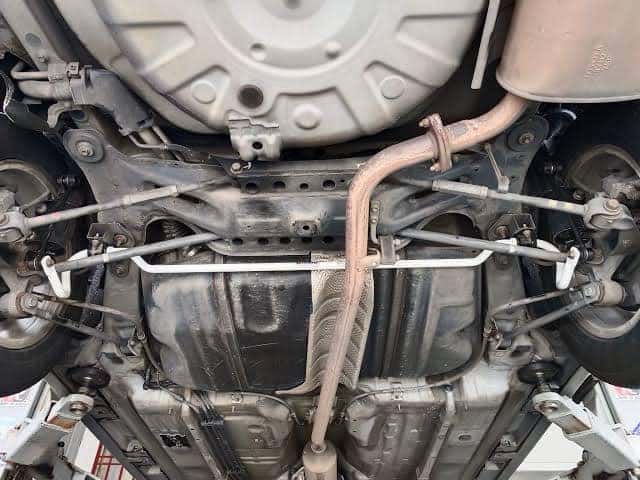
Brake lines carry pressurized fluid to each wheel. Many are steel tubing that runs along the frame and underbody, exposed to spray and impact. Surface rust may be cosmetic, but deeper corrosion can thin the metal and eventually cause a leak.
Suspension components such as control arms, struts, springs, sway bar links, and mounting hardware hold your wheels in place and manage your ride. Rust can seize bolts, weaken brackets, and make routine repairs harder and more expensive.
Brake calipers, slide pins, and rotors sit near the wheels and take heavy salt exposure. Corrosion can cause calipers to stick, brake pads to wear unevenly, and pedals to feel inconsistent.
Fuel lines, exhaust components, and subframe areas also sit low and collect salt, although their condition varies by model and year. Certain older Toyota trucks have also been subject to frame-related service campaigns, so it is worth checking your vehicle’s recall status if you drive an older pickup or SUV.
Protective Habits That Slow Corrosion
You cannot stop winter, but you can reduce how much damage it does. A few consistent habits make a real difference. For additional guidance, the dealership’s service and parts tips are a helpful reference.
- Rinse the underbody regularly: Choose a wash with an undercarriage spray and use it after snowstorms, particularly when temperatures climb above freezing.
- Wash wheel wells and lower body panels: Packed slush and salt in these areas holds moisture against metal for days.
- Keep the garage dry: Parking a wet, salty vehicle in a warm garage speeds up chemical activity, so rinse first if you can.
- Address chips and scrapes quickly: Bare metal exposed by stone chips is where rust starts, even on lower body panels.
- Consider a rust inhibitor treatment: Protective coatings applied to the underbody can add a barrier, and a technician can advise which products suit your vehicle.
Spring is also the time for a deeper cleaning. Once the last salt trucks retire for the year, a thorough rinse helps remove what accumulated during the season.
Brake Lines and Brake Fluid: The Hidden Connection
Brake systems can corrode from two directions. Outside, salt and moisture attack the metal lines and fittings. Inside, brake fluid is hygroscopic, which means it absorbs moisture from the air over time. That moisture lowers the fluid’s boiling point and can promote internal corrosion in lines, calipers, and other components.
Replacing brake fluid on schedule helps protect the system from the inside, and a visual inspection protects it from the outside. Your owner’s manual and maintenance schedule describe the recommended service interval, and technicians can also test the fluid’s condition during a visit.
Pay attention to how your brakes feel. A soft or sinking pedal, a longer stopping distance, a brake warning light, or a vehicle that pulls to one side deserves prompt attention. Any visible wetness or drips near a wheel or along the underbody could point to a leak. If you notice any of these, avoid driving until the vehicle is inspected.
What a Professional Underbody Inspection Covers
A technician raises your Toyota on a lift and examines areas that are nearly impossible to see from the driveway. The inspection typically includes brake lines and hoses, calipers, rotors, and pads, along with control arms, bushings, ball joints, struts, springs, and sway bar links. The frame, subframe, exhaust, and fuel line areas can also be checked for scaling, flaking, or thinning metal.
The goal is to find corrosion in its early stages. Surface rust can often be monitored or treated, while advanced rust on a brake line or structural part needs timely repair. Knowing which category you are in helps you plan your budget instead of facing a surprise.
Seasonal timing matters too. Many owners schedule an inspection in late fall before the worst of winter and again in spring to assess what the season did. You can see what your vehicle is due for through the online maintenance menu, which makes it easy to line up routine work with seasonal checks.
Driving Smart When Conditions Are at Their Worst
Corrosion is a slow problem, but winter roads can create immediate risks. Before heading out in heavy snow, check current conditions on OHGO, the state’s traveler information resource, so you can choose a safer route and avoid closures or slow traffic.
Brake gently on slick pavement, allow extra stopping distance, and avoid slamming through deep slush at speed, which can force salty water into brake components and wheel wells. It also helps to confirm your vehicle has no open safety recalls. You can look up your VIN using the NHTSA recall lookup in about a minute.
If a hard pothole strike or curb hit occurs, have the underbody checked, since impacts can damage already weakened, rusted components more easily than healthy ones.
The Cost of Prevention Versus Repair
The financial difference between protecting an underbody and repairing a corroded one is wide. The figures below are general, approximate ranges and will vary by model, year, and the work required. Always request a written estimate for your specific Toyota.
- Underbody wash and inspection: Typically a small expense, and the most affordable way to slow corrosion.
- Brake fluid service: Usually a modest cost that supports the long-term health of the system.
- Brake line replacement: Often several hundred dollars or more, depending on which lines are affected and how accessible they are.
- Caliper, rotor, or control arm replacement: Commonly runs into the hundreds per component, and seized hardware can add labor time.
- Structural or frame repair: Can reach into the thousands, which is why catching rust early matters so much.
Seen together, the numbers make a clear case. Prevention is simple and inexpensive, while neglected corrosion tends to compound.
Keep Your Toyota Strong Through Every Lake Effect Season
Winter in Northeast Ohio is not going away, but your Toyota can handle it with the right care. Rinse away salt, stay on top of brake fluid, and have the underbody inspected at least once a year. Small steps taken now protect both your safety and your long-term ownership costs.
If your vehicle is due for an inspection or you have noticed rust, leaks, or unusual brake behavior, the team at Toyota Cleveland Heights, located at 2950 Mayfield Rd, Cleveland Heights, OH 44118, United States, can take a close look and recommend the right next step. You can schedule service online whenever it suits you and head into the season with confidence.
0 comment(s) so far on Lake Effect Corrosion Defense: Protecting Toyota Underbody Suspension Components & Brake Lines