

Lake-Effect Snow Preparation: Selecting and Mounting Winter Tires for Your Toyota RAV4 or Camry
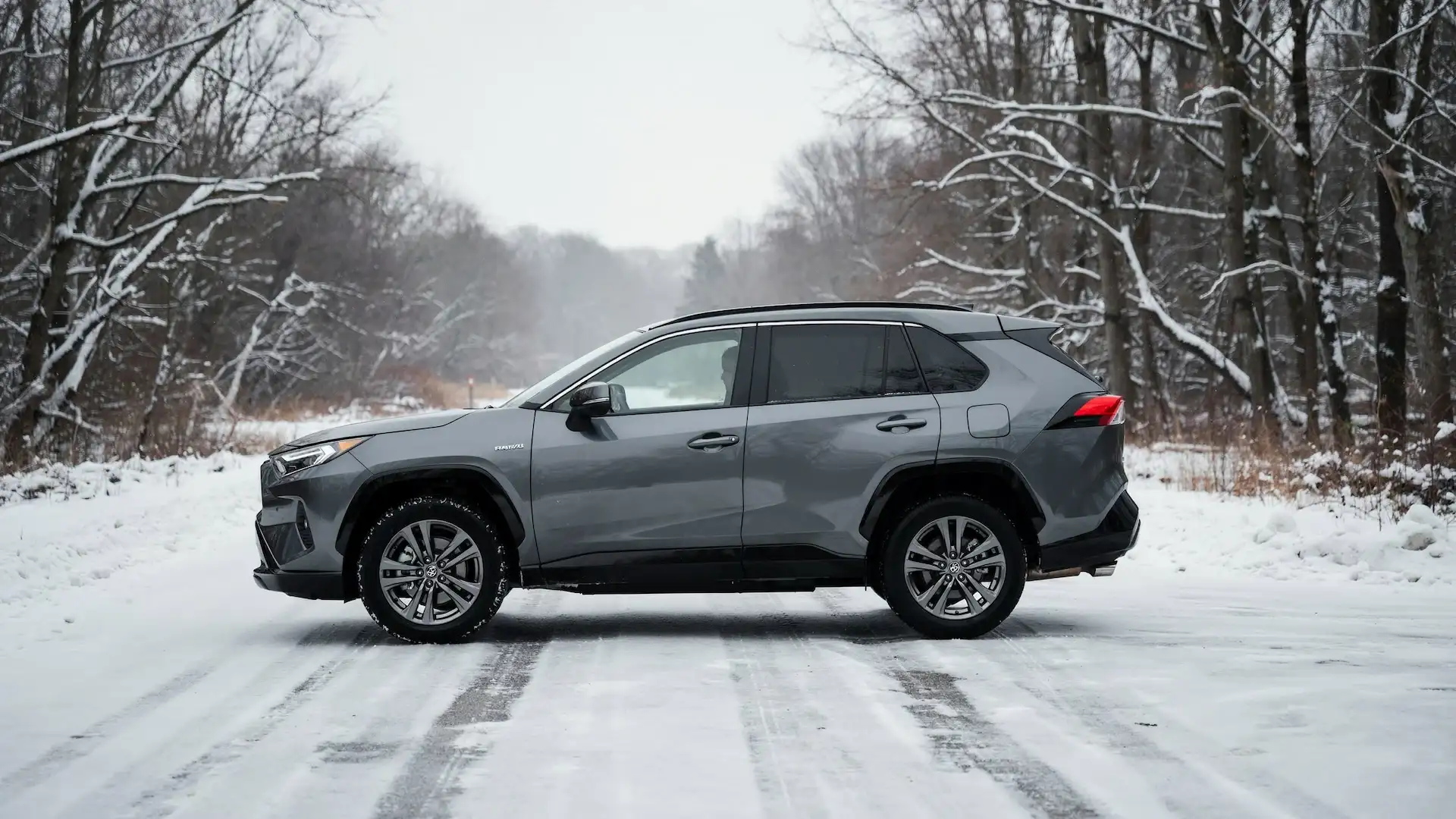
Key Takeaways
- Winter tires beat all-season tires in the cold: Winter rubber stays flexible below about 45 degrees Fahrenheit, which means shorter stopping distances on snow, slush, and cold dry pavement.
- AWD helps you go, not stop: A RAV4 with all-wheel drive can accelerate well in snow, but only the tires determine how quickly the vehicle brakes and corners.
- Buy and mount a full set of four: Mixing winter tires on one axle with all-season tires on the other can upset balance and traction, especially in a front-wheel-drive Camry.
- Timing matters: Mount your set once temperatures settle in the 40s, typically before the first lake-effect system, rather than waiting for the first snowfall.
If you have ever watched a bright afternoon on Mayfield Road turn into a whiteout within twenty minutes, you already understand lake-effect snow. A band comes off Lake Erie, dumps a few inches on the Heights, and leaves the hills slick before the plows catch up. A set of four winter tires costs far less than an insurance deductible, a tow from a snowbank on Cedar Hill, or the repairs that follow a slide into a curb.
Why Lake-Effect Snow Is Different
Lake-effect snow forms when cold air moves across the relatively warm waters of Lake Erie, picking up moisture that falls as snow once it reaches land. The result is narrow, intense bands that can bury one neighborhood while leaving another a few miles away mostly dry. Cleveland Heights sits on a ridge well above the lakeshore, so the area often sees heavier totals and colder surface temperatures than communities down by the water. You can follow band forecasts and winter advisories through the National Weather Service office in Cleveland, which is a good habit once November arrives.
The terrain adds to the challenge. Steep grades on Cedar Hill, Coventry Road, and Fairmount Boulevard demand traction both uphill and downhill, and the stop-and-go flow near Cedar Lee, Severance, and the I-271 ramps leaves little room for a slow reaction. Fast-changing conditions are exactly where tire grip makes the biggest difference.
Winter Tires vs. All-Season Tires
All-season tires are a compromise. Their rubber compound is designed to work across a wide range, but it begins to stiffen once temperatures fall below roughly 45 degrees. Stiff rubber grips pavement poorly, and that is true even on a clear, dry road, not just a snowy one.
Winter tires use a softer compound that stays pliable in the cold, along with deeper tread blocks and thousands of tiny slits called sipes that bite into snow and ice. Their tread patterns also channel slush away from the contact patch, which helps prevent hydroplaning on the wet, slushy roads that follow a lake-effect storm. Testing consistently shows meaningful gains in braking and cornering compared with all-season tires once the weather turns cold. The National Highway Traffic Safety Administration’s tire safety resources explain how tire condition and type affect safety in winter driving.
What to Look for When Choosing a Set
Shopping for winter tires is simpler when you know which features matter for your Toyota:
- The three-peak mountain snowflake symbol: This marking on the sidewall means the tire has passed a standardized snow traction test, and it is the most reliable sign of a true winter tire.
- The correct size and load rating: Match the size printed on your driver’s door jamb placard, and keep the speed and load ratings at or above the original specification.
- Tread depth: Choose new tires with full tread, and plan to replace winter tires once they wear down to about 5/32 of an inch, since their snow grip falls off before the legal minimum.
- Tire type for your driving: Studless winter tires are the standard choice for most drivers, while a quality performance winter tire can suit those who spend more time on dry highway miles.
- A matched set of four: Buying all four at once keeps traction consistent front to back and side to side.
Fitment matters as much as the tire itself. The RAV4 and Camry are sold with several wheel sizes depending on the trim, from 16 inch up to 19 inch. Many drivers choose a smaller, taller winter setup, such as dropping to an 17 inch wheel where the vehicle allows it, because narrower tires with more sidewall tend to cut through snow better and cost less. Your dealership can confirm which sizes are approved for your exact model and trim, and Genuine Toyota parts are available through the parts center.
RAV4 and Camry: What AWD Does and Does Not Do
Many RAV4 models, and some newer Camrys, are available with all-wheel drive. Toyota’s AWD systems send power to the rear wheels when the front tires start to slip, and they can help a vehicle pull away from a stop or climb a snowy hill with more confidence. Some RAV4 trims add Dynamic Torque Vectoring, which can shift torque between the rear wheels to help the vehicle rotate through turns.
None of that changes the physics of braking. Every vehicle stops using four small patches of rubber, and AWD does not add any stopping grip. A RAV4 on worn all-season tires can still slide through an intersection, while a front-wheel-drive Camry on proper winter tires can often stop shorter than an AWD vehicle on the wrong rubber. If you own a front-wheel-drive Camry, winter tires matter even more, since the front tires handle steering, braking, and most of the driving force at the same time.
Mounting Winter Tires the Right Way
Where and when you install the tires affects how well they work. Many drivers choose to buy a second set of wheels, which are steel or alloy wheels already fitted with winter tires. Switching sets each season is faster, avoids repeatedly stretching tire beads on and off the same rim, and protects your primary wheels from salt and brine.
A few technical points deserve attention during mounting:
Tire pressure monitoring: Your Toyota uses a tire pressure monitoring system with a sensor in each wheel. A second set of wheels needs its own sensors, and they should be programmed so the dashboard shows accurate readings. Pressure also drops roughly one pound for every ten degrees the temperature falls, so check it often and keep it at the level listed on the door jamb placard.
Lug nut torque: Lug nuts should be tightened in a star pattern to the factory torque specification, not by guesswork, since uneven tightening can warp a brake rotor or loosen a wheel. A recheck after the first fifty miles or so is good practice.
Balance and alignment: Each tire and wheel should be balanced, and a quick alignment check helps winter tires wear evenly, particularly after a season of potholes.
Direction and rotation: Many winter tires are directional, meaning they must be mounted to roll in one direction. A technician will install them correctly and can rotate them on schedule to even out wear.
When to Swap and How to Store Your Tires
A common rule is to mount winter tires when daily highs consistently stay below about 45 degrees, which in Northeast Ohio often falls between late October and mid November. Waiting for the first snow usually means joining a long line of other drivers with the same idea, so scheduling early avoids the rush. In spring, swap back once temperatures stay above that level, since soft winter rubber wears faster on warm pavement.
Store the off-season set somewhere cool, dry, and out of direct sunlight, ideally in tire bags or stacked on their sides. Clean them first and note the wheel positions so you can keep a consistent rotation pattern. Your maintenance plan can help keep seasonal swaps and tire care on track, and the ToyotaCare information page outlines what is included for new Toyota owners.
What Winter Tires Cost Compared With Going Without
Prices vary by tire brand, wheel size, and whether you buy extra wheels, but this overview shows how the pieces fit together:
- A set of four winter tires: A meaningful upfront expense, though the cost is spread across several winters because the set only wears during the cold months.
- A second set of wheels and tire pressure sensors: An added upfront cost that pays back through cheaper seasonal swaps and protection for your original wheels.
- Seasonal mounting and balancing: A modest recurring service fee, usually far less than the cost of a repair after a winter collision.
- A winter accident or tow: Often the most expensive outcome, with a deductible, possible increase in premiums, and the cost of repairing suspension or body damage.
Because your all-season tires sit unused while the winter set is on the car, they also last longer, which offsets part of the cost over time.
Get Your Toyota Winter-Ready in Cleveland Heights
Before the first lake-effect band rolls in off Lake Erie, make sure your RAV4 or Camry is sitting on tires built for the season. The team at Toyota Cleveland Heights, located at 2950 Mayfield Rd, Cleveland Heights, OH 44118, United States, can help you choose the right size, mount and balance your winter set, and confirm your pressure sensors are reading correctly. You can schedule service online and be ready for the first snow well ahead of the crowd.
0 comment(s) so far on Lake-Effect Snow Preparation: Selecting and Mounting Winter Tires for Your Toyota RAV4 or Camry