
Lake Erie Salt Defense: Guarding Your Toyota’s Frame & Fuel Lines Against Corrosion
Key Takeaways
- Lake effect snow around Cleveland Heights means road crews apply salt heavily and often throughout the winter, and that salt accumulates on the underside of every vehicle that drives through it
- Frame and undercarriage corrosion develops gradually, often out of sight, making regular inspection more important here than in less salt heavy regions
- Fuel lines and brake lines, typically made of steel, are especially vulnerable to salt exposure over years of Cleveland winters
- A routine undercarriage wash during winter months is a small, inexpensive habit that meaningfully slows the pace of salt related corrosion
If you’ve lived near the lake through more than one Cleveland winter, you already know how aggressively road crews salt these streets once the snow starts falling. An undercarriage wash typically costs somewhere in the ten to twenty dollar range, while a corroded fuel line or frame repair resulting from years of salt exposure can run into the thousands once the damage has progressed.
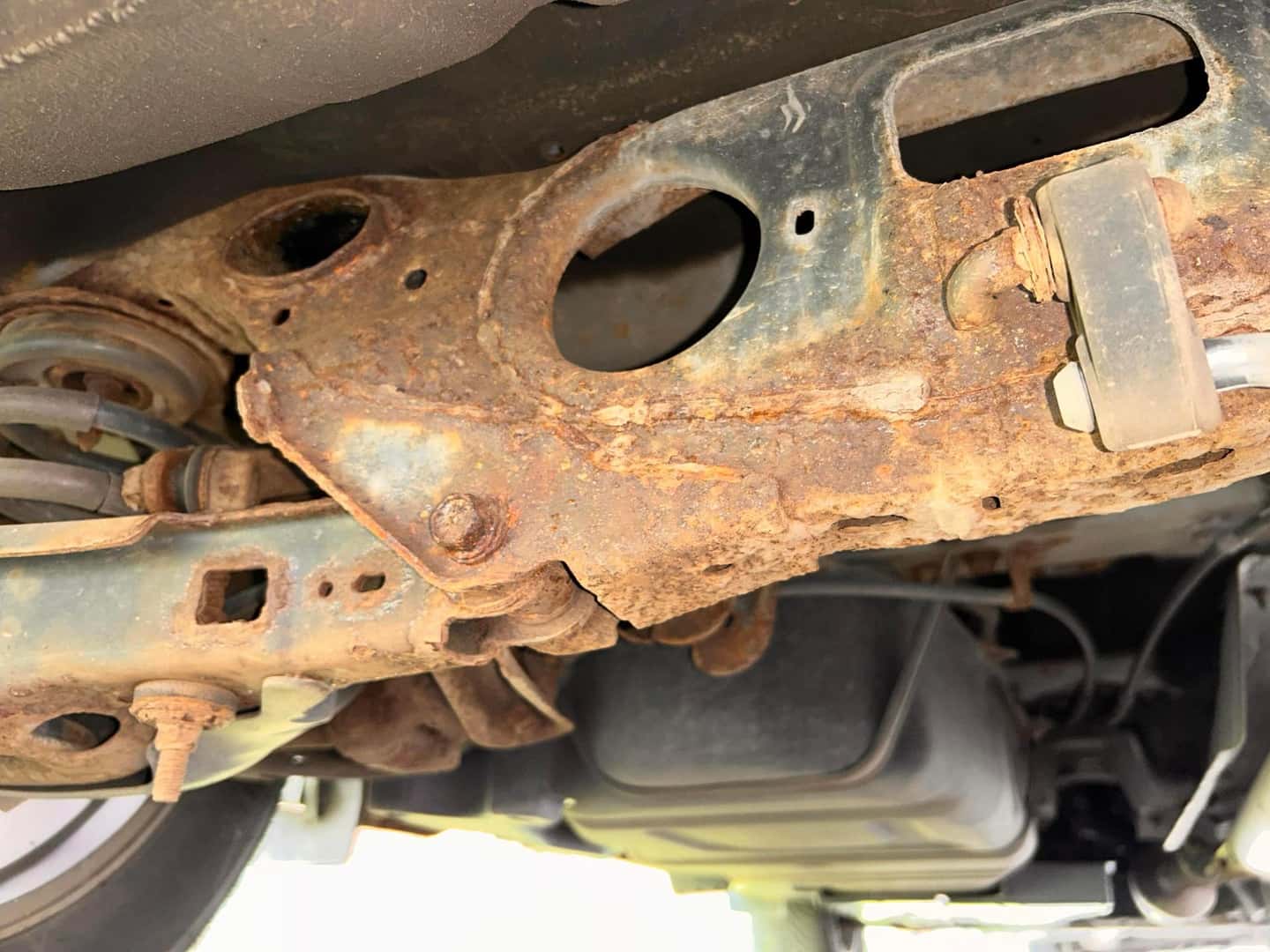
Cleveland Heights sits close enough to Lake Erie to experience the lake effect snow that defines a Northeast Ohio winter, and that heavy, frequent snowfall means road crews apply salt liberally and often to keep streets passable. That salt does its job well on the road surface, but every application ends up coating the underside of vehicles that drive through it, and repeated exposure over months of winter driving creates the conditions for serious corrosion if the underlying metal isn’t given some form of protection or regular attention.
Why Road Salt Is So Damaging to a Vehicle’s Undercarriage
Road salt works by lowering the freezing point of water, which is exactly why it’s effective at keeping roads clear, but that same chemical property makes it corrosive to the metal components underneath a vehicle. Salt accelerates the oxidation process that causes metal to rust, and unlike a light rain that eventually washes away, salt residue tends to cling to the undercarriage, wheel wells, and frame long after a snowstorm has passed, especially when that residue gets trapped in road grime and doesn’t have a chance to fully rinse away.
Owen Radzik, a technician at our Cleveland Heights service center, says the vehicles he sees with the most advanced corrosion tend to be ones that haven’t had regular undercarriage washes through multiple winters, allowing salt to sit against the frame and other steel components for extended stretches. He explains that corrosion doesn’t happen overnight. It’s a gradual process that compounds year over year, which means a vehicle that’s been driven through five or six Cleveland winters without much undercarriage attention is in a very different position than one that’s had regular washes and inspections throughout that same period.
Fuel Lines and Brake Lines: The Hidden Vulnerability
While frame corrosion tends to get the most attention, fuel lines and brake lines deserve just as much consideration, since both are typically made of steel and run along the underside of the vehicle where they’re directly exposed to salt spray kicked up from the road. A corroded fuel line can develop small leaks over time, and a corroded brake line represents an even more serious safety concern, since a line that fails under pressure compromises the vehicle’s ability to stop.
Priya Nair, a service advisor here at the dealership, says fuel and brake line corrosion is one of the less visible risks of a heavy salt winter, precisely because these components aren’t something most drivers think to check on their own. She recommends having the undercarriage, including fuel and brake lines, visually inspected as part of routine service through the winter and into spring, since catching early stage corrosion on a line is a far simpler fix than dealing with a line that’s failed or is actively leaking.
- Fuel lines and brake lines run along the vehicle’s underside and are directly exposed to salt spray during winter driving
- Early stage corrosion on a line is often treatable, while advanced corrosion typically requires full line replacement
- A visual inspection during routine service can catch developing corrosion before it becomes a safety issue
- Vehicles driven consistently through multiple salt heavy winters without undercarriage attention face significantly higher corrosion risk over time
Simple Habits That Meaningfully Slow Corrosion
The good news is that a few consistent habits go a long way toward protecting a vehicle’s frame and fuel lines from Cleveland’s winter salt exposure. Regular undercarriage washes, ideally after any significant snow event or extended period of driving on salted roads, rinse away accumulated salt before it has a chance to sit against the metal for weeks at a time. Many car washes offer an undercarriage rinse option specifically for this purpose, and it’s worth using during the winter months even if the rest of the vehicle doesn’t necessarily need a full wash.
Owen also points out that paying attention to where a vehicle is parked matters more than people realize. A garage or covered parking area gives accumulated salt and moisture a chance to dry out between drives, rather than sitting wet against the undercarriage overnight in freezing temperatures, which tends to accelerate the corrosion process. For drivers without access to covered parking, more frequent undercarriage washes help offset that disadvantage.
Why Toyota’s Corrosion Protection Doesn’t Eliminate the Need for Maintenance
Toyota vehicles come from the factory with corrosion resistant coatings and rust proofing applied to key undercarriage components, and that protection genuinely helps extend the life of the frame and other steel parts. Priya cautions customers not to read that factory protection as a guarantee against corrosion altogether, though, especially in a climate as salt heavy as Cleveland’s. Factory coatings reduce the rate at which corrosion develops, but they don’t stop the process entirely once a vehicle has been driven through several winters of consistent salt exposure. Over time, coatings can wear thin in high exposure areas like wheel wells and the underside of the frame, and once that protective layer is compromised, the bare metal underneath is just as vulnerable as it would be without any coating at all.
That’s part of why Owen recommends thinking about corrosion protection as an ongoing responsibility rather than a one time factory feature. Aftermarket undercoating treatments are available and can add an additional layer of protection, particularly for vehicles that see consistent winter driving on heavily salted roads year after year. He suggests discussing options with a technician based on how many winters the vehicle has already been through and how it’s typically parked and driven, since a vehicle with covered parking and regular washes has different needs than one that sits outside through every storm.
Recognizing Early Signs of Corrosion Before It Becomes Serious
A few warning signs are worth watching for as winter progresses into spring. Visible rust or flaking metal on the undercarriage, wheel wells, or frame rails is an obvious sign worth having assessed by a technician. A fuel smell that wasn’t there before can indicate a developing leak in a corroded fuel line, and this should be addressed promptly rather than ignored. Unusual noises from the undercarriage, particularly rattling or clunking that wasn’t present before, can sometimes point to a component that’s been weakened by corrosion.
- Schedule regular undercarriage washes throughout winter, ideally after any significant salt application or snow event
- Have the frame, fuel lines, and brake lines visually inspected during routine service, especially heading into spring
- Address a new fuel smell or unusual undercarriage noise promptly rather than waiting to see if it resolves
- Consider covered parking when possible, since it reduces the amount of time salt and moisture sit against the undercarriage
Cleveland Heights winters aren’t getting any lighter on salt, and a Toyota that’s had consistent undercarriage attention holds up to that reality far better than one that hasn’t. Toyota Cleveland Heights, located at 2950 Mayfield Rd, Cleveland Heights, OH 44118, is glad to run through an undercarriage inspection or set up a regular winter wash routine, whether you’re trying to get ahead of corrosion on a newer vehicle or catch developing damage on one that’s been through a few Northeast Ohio winters already.
0 comment(s) so far on Lake Erie Salt Defense: Guarding Your Toyota’s Frame & Fuel Lines Against Corrosion