

Pothole Season Survival Guide: Suspension Checks for Your Toyota RAV4 and Highlander
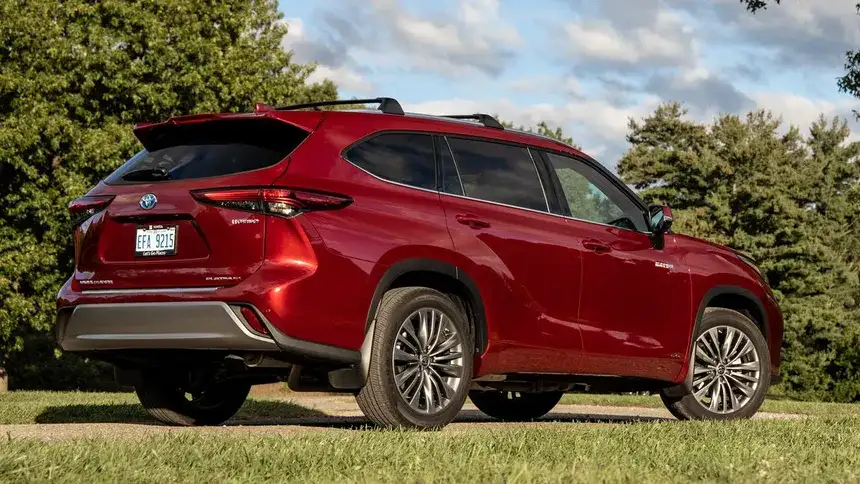
Last month, a Highlander came in from University Heights after its owner had noticed a pulling sensation to the right that had been developing since February. She had chalked it up to crowned roads and uneven snow ruts on South Taylor Road and kept driving her normal route along Mayfield Road and down Cedar Hill. After six weeks and roughly 3,000 miles of continued driving on a bent front strut, the alignment had shifted far enough to cause uneven tire wear across both front tires. The strut inspection and alignment correction she needed at the first sign of pulling? $210. The two front tires she now needed to replace early on top of the alignment and strut work? $890 total.
That scenario is the most common version of a story we hear every spring at Toyota Cleveland Heights, and it almost always involves the same stretch of Greater Cleveland roads. Mayfield Road, Cedar Road, Fairmount Boulevard, and the approach ramps on I-271 absorb a brutal freeze-thaw cycle every winter, and by March the pothole situation across Cuyahoga County is genuinely punishing on suspension systems.
The RAV4 and Highlander are two of the most capable and durable vehicles Toyota builds, but their suspension components are precision-engineered systems, not indestructible hardware. A single significant pothole impact at speed can bend a wheel, shift an alignment, or compromise a strut mount in ways that aren’t immediately obvious but compound quietly over every subsequent mile.
This guide walks through what your RAV4 or Highlander’s suspension actually does, what Cleveland Heights road conditions do to it every winter, how to recognize the warning signs early, and what proactive checks should happen every spring.
What Your Toyota’s Suspension Is Actually Doing
Most drivers think of the suspension as a comfort feature, the system that smooths out bumps so the ride feels pleasant. That’s part of it, but it undersells the job considerably.
Your RAV4 or Highlander’s suspension system maintains the precise geometric relationship between your tires and the road surface across every driving condition. Camber, caster, and toe angles are set at the factory to specific tolerances measured in fractions of a degree. Those angles determine how evenly your tires wear, how your vehicle tracks in a straight line, how it responds to steering input, and how it behaves in emergency braking and evasive maneuvers.
When a suspension component is bent, worn, or displaced by a pothole impact, those angles change. The vehicle keeps driving, the driver often adapts without realizing it, and the tires absorb the cost of the misalignment in accelerated wear while the handling compromise builds gradually in the background.
The Components Most Vulnerable on Cleveland Roads
The front suspension on both the RAV4 and Highlander uses a MacPherson strut design with a lower control arm and stabilizer bar. The strut itself houses both the shock absorber function and serves as a structural component in the steering geometry. This means a strut that has taken a hard impact isn’t just a ride comfort issue. It’s a steering accuracy issue.
The lower control arm bushings and ball joints are the next most vulnerable components on Cleveland-area roads. These rubber and metal interfaces absorb lateral and vertical forces simultaneously, and repeated pothole impacts accelerate the bushing wear that eventually causes the loose, wandering feel that drivers often describe as the car “not tracking right” on the I-90 or US-322 commute.
What AWD Adds to the Conversation
Both the RAV4 AWD and Highlander AWD variants carry the additional consideration that suspension geometry misalignment affects not just tire wear but also the driveshaft angles and rear differential loading. On all-wheel-drive Toyotas, what starts as a front alignment issue can introduce stress on drivetrain components if left uncorrected long enough. 🔧
What Cleveland Heights Road Conditions Do to Suspension Systems
Northeast Ohio’s pothole season isn’t a weather event. It’s a geological process. Water infiltrates asphalt cracks, freezes, expands, and fractures the road surface from below. When the ice melts, it leaves a void beneath a weakened asphalt shell that collapses under traffic load into the characteristic pothole that Cuyahoga County drivers know intimately.
The result by late February and March is a road network where the worst stretches, including sections of Euclid Avenue, the eastbound approach to the I-271 and US-322 interchange, and numerous side streets in Cleveland Heights and South Euclid, can feature potholes deep enough to cause immediate, measurable suspension damage on a single impact.
The Cumulative Impact Problem
Single dramatic pothole impacts get attention because drivers feel them. The more insidious damage pattern is cumulative: dozens of moderate impacts across a winter season that individually don’t trigger a dramatic response but collectively fatigue bushing materials, loosen ball joint tolerances, and shift alignment angles incrementally. By March, a RAV4 that hasn’t had a suspension inspection since the previous spring has absorbed thousands of individual road inputs that no single one of which felt alarming.
A RAV4 XLE owner from Lyndhurst came in last April after his wife mentioned the steering wheel wasn’t centered when driving straight on Mayfield Road. He had noticed it himself but assumed the road was cambered. A suspension inspection found worn front lower control arm bushings on both sides and a toe alignment that had drifted outside of Toyota’s specification. The bushing replacement and alignment service ran $580. His tires, caught before the wear pattern became severe, were salvageable. Had he waited another season, he’d have been looking at $580 in bushings, alignment, and $700 in tires.
Warning Signs Your RAV4 or Highlander’s Suspension Needs Attention
The challenge with suspension wear is that it often develops gradually enough that drivers adapt to the symptoms without recognizing them as symptoms. These are the signs worth taking seriously this spring.
Pulling to one side on a flat, straight road is one of the clearest indicators that your alignment has shifted or that one side of the suspension has been affected more than the other by a pothole impact or wear.
A steering wheel that isn’t centered when driving straight, even slightly off-center, indicates an alignment issue that is actively wearing your tires unevenly with every mile driven.
Vibration through the steering wheel at highway speed on I-271 or I-90, particularly vibration that varies with speed, can point to wheel balance disruption from a pothole impact or a bent wheel creating imbalance.
A clunking or knocking sound over bumps at low speed, such as navigating the speed humps on residential streets in Cleveland Heights, typically indicates a worn ball joint, loose strut mount, or degraded control arm bushing.
Excessive body roll in corners or a vague, imprecise steering feel that has developed gradually over the past year points to stabilizer bar end links or bushings that have worn beyond their useful life.
Uneven tire wear visible on inspection, with more wear on the inside or outside edge of a tire than across the full tread width, is the physical record of alignment angles that have been out of specification for an extended period. 🔧
A nose-dive sensation under braking that feels more pronounced than it used to, or a rear end that floats over highway expansion joints on I-271, indicates struts or shocks that have lost their damping capacity and need replacement.
If you recognize two or more of these symptoms in your current driving experience, a spring suspension inspection should be your next appointment, not a deferred item.
The Real Cost of Waiting vs. Acting Early
The financial case for proactive spring suspension checks is straightforward when the numbers are laid out honestly.
Reactive approach, ignoring symptoms through spring and summer:
- Alignment correction after tires worn beyond recovery: $130
- Two replacement tires (RAV4 size): $400 to $600
- Control arm bushing replacement after extended wear: $480 to $640
- Total reactive cost: $1,010 to $1,370
Proactive spring inspection approach:
- Full suspension inspection: $0 with service appointment at Toyota Cleveland Heights
- Alignment check and correction if needed: $99 to $130
- Bushing replacement caught before accelerated wear: $380 to $480
- Tires preserved through full usable life: $0 additional
- Smart proactive total: $479 to $610
Your savings from catching it early: $530 to $760. Those numbers reflect what our service team at the Mayfield Road location sees on actual repair orders every spring season.
“The RAV4 and Highlander are genuinely tough vehicles, but I see owners assume that toughness extends to the suspension geometry staying in spec after a hard Cleveland winter,” says Brian Kowalski, Senior Toyota Technician at the Mayfield Road location. “It doesn’t work that way. The structural components hold up fine, but the alignment tolerances are precise, and Northeast Ohio roads move them. A spring check takes less than an hour and tells you exactly where you stand before the problem has had a full season to develop.”
Your 30-Day Suspension Check Plan
This week: Do a simple self-assessment on your next drive along a flat, straight section of road. On a level stretch of Mayfield Road or Cedar Road with no crown bias, note whether your RAV4 or Highlander tracks straight without steering correction. Also note whether your steering wheel is centered when driving straight, and whether you feel any vibration through the wheel at highway speed. These three observations take zero additional time and give you a starting point for your service conversation.
Within two weeks: Walk around your vehicle and crouch down to look at your front tires from the front. Look at the inner and outer tread edges and compare the wear level across the full width of the tire. If the inside or outside edge is noticeably more worn than the center of the tread, your alignment has been out of spec long enough to leave a mark. Note which tire and which edge and include that when you book your appointment.
By month’s end: Schedule a spring suspension inspection at our Mayfield Road location. Our Toyota-certified technicians will check alignment angles against factory specification, inspect strut condition, evaluate ball joint and bushing integrity, and give you a clear picture of what the past winter has done to your suspension system. Combining this with your spring tire rotation means one appointment covers the full seasonal picture.
These three steps take less than two hours across the month and can catch the kind of compounding damage that quietly turns a $130 alignment job into a $900 tire and repair situation.
Cleveland Heights winters are not kind to suspension systems, and the RAV4 and Highlander deserve the same seasonal attention that Northeast Ohio drivers give to their furnaces and gutters every spring. The roads have done their damage. Now is the time to assess it before summer driving compounds it further.
Schedule Your Spring Suspension Inspection Today
The University Heights Highlander owner from the opening of this post got her strut work, alignment, and both front tires handled in a single appointment. She left knowing exactly what the winter had cost her suspension and with a clear plan for catching it earlier next year. Her RAV4-driving neighbor, who heard the story, came in the following week for a proactive check that found only a minor alignment correction needed, $99 and done.
At Toyota Cleveland Heights, our certified technicians inspect RAV4 and Highlander suspension systems every spring with the training and Toyota-specific knowledge to identify what Greater Cleveland roads actually do to these vehicles season over season. Whether you’re already feeling a symptom or simply want the peace of mind of knowing your suspension came through winter in good shape, we’ll give you a straight answer and a clear recommendation.
Schedule your spring suspension inspection today by contacting our service department or booking online. You’ll find us at 2950 Mayfield Rd, Cleveland Heights, OH 44118.
Proper suspension maintenance protects your tire investment, preserves your RAV4 or Highlander’s handling precision, and ensures your vehicle responds the way Toyota engineered it to when Northeast Ohio roads demand it most. That’s the confidence a clean spring inspection delivers.
0 comment(s) so far on Pothole Season Survival Guide: Suspension Checks for Your Toyota RAV4 and Highlander