

Starting Problems in Northeast Ohio: Is It Your Toyota’s Starter, Alternator, or Battery?
Key Takeaways
- Symptoms point the way: A slow crank, a single click, and dimming lights each suggest a different culprit, so listen closely before you call for help.
- Cold exposes weak batteries: Northeast Ohio winters cut a battery’s available power sharply, and a unit that seemed fine in September can fail in January.
- Do not keep jump-starting: Repeated jumps often mean the real problem is the alternator or starter, and they can stress other electrical components.
- Testing is quick: A professional battery and charging system test takes little time and tells you exactly which part needs attention.
Few things sink a morning faster than turning the key or pressing the start button in a Cleveland Heights driveway and hearing nothing but a click. A battery test and charging system check costs far less than the tow, the missed work, and the rushed repair that follow a no-start on a freezing day. Knowing how to tell a failing battery from a tired starter or a weak alternator can save you time, money, and a lot of frustration.
Why Northeast Ohio Winters Are So Hard on Starting Systems
Cold weather makes every part of your Toyota’s starting system work harder. Chemical reactions inside a battery slow down as temperatures drop, which reduces the power it can deliver at the exact moment your engine needs the most. Engine oil thickens at the same time, so the starter has to turn a more stubborn engine with a weaker supply of electricity.
Lake Erie adds its own challenges. Lake effect snow, sudden temperature swings, and road salt spray along Mayfield Road, Cedar Road, and the hills near Cain Park all test your vehicle’s electrical system. Short trips around town, like a quick run to Cedar Lee or a school drop-off, make things worse, because the alternator never gets enough time to fully recharge the battery.
Start With the Sound: What Your Toyota Is Telling You
The way your vehicle fails to start is the best clue you have. Pay attention to what you hear and see the next time it happens:
- A slow, labored crank: The engine turns over, but sluggishly, like it is struggling to wake up. This usually points to a weak or aging battery.
- A single loud click, then silence: The starter is receiving a signal but not turning the engine. That can mean a failing starter or solenoid, or a battery with too little power to engage it.
- Rapid clicking: A fast clicking or ticking sound typically means the battery cannot supply enough current, often because it is discharged or has corroded connections.
- No sound and no lights: A completely dead dashboard may mean a fully drained battery or a loose or corroded terminal.
- Engine cranks normally but will not catch: This is usually a fuel or ignition concern rather than a starting system fault, and it deserves a separate inspection.
These patterns are general guides rather than a diagnosis, but they help you describe the problem accurately when you call for service.
Signs Your Battery Is the Problem
The battery is the most common cause of starting trouble, especially in winter. Most automotive batteries last roughly three to five years, and Northeast Ohio’s temperature swings can push them toward the shorter end of that range. If your battery is in that age window, it deserves extra suspicion.
Common signs include a slow crank, headlights that look dim when the engine is off, a dashboard battery or check engine light, and a swollen or leaking case. White or bluish crusty buildup on the terminals is another red flag, since corrosion blocks the flow of electricity. Cleaning terminals can sometimes help, but a battery that fails a load test needs to be replaced, not nursed along.
The Battery Council International offers helpful general information on battery care and recycling, and it is a good resource if you want to learn more about how batteries age.
Signs Your Starter Is Failing
The starter is a small electric motor that spins the engine to get it running. When it wears out, the symptoms often come and go at first, which makes it tricky to pin down. You may turn the key and get a click or a whirring noise with no engine rotation, then try again a minute later and have it start normally.
A grinding sound during cranking can mean the starter gear is not engaging the flywheel properly. A burning smell or smoke near the engine bay after repeated attempts is a serious sign that something is overheating, and you should stop trying to start the vehicle. Unlike a battery, a starter rarely gives long advance warning, and a part that worked this morning can fail completely by evening.
Because it is a mechanical and electrical component, a worn starter will not improve with time. If the battery tests fine and the symptoms match, the starter is the likely suspect.
Signs Your Alternator Is Failing
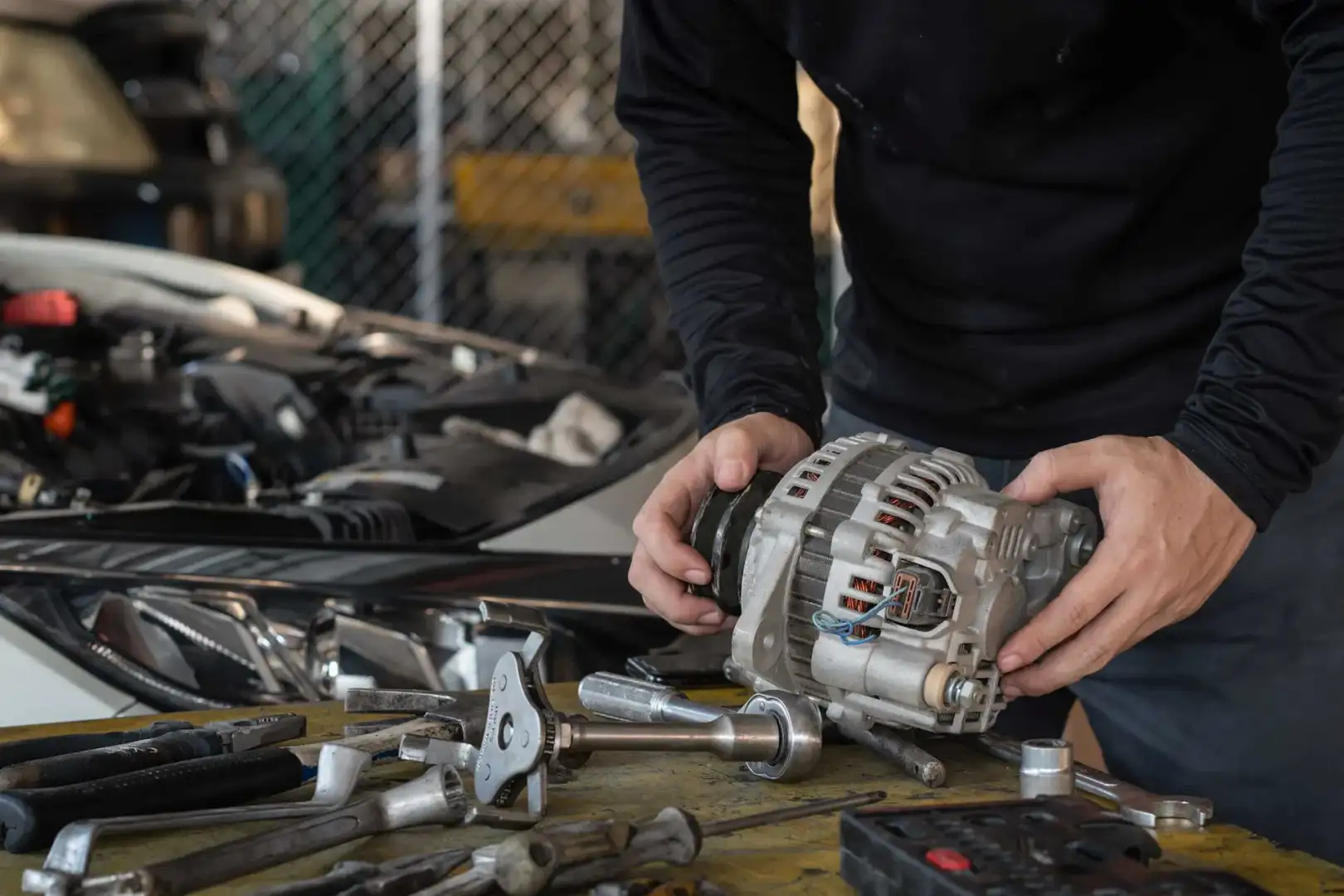
The alternator is the part that recharges your battery and powers your electrical systems while the engine runs. When it weakens, the battery slowly drains, and the vehicle eventually refuses to start, which is why alternator problems are often mistaken for bad batteries.
Watch for headlights that dim or flicker, a battery or charging warning light on the dashboard, a whining or growling noise from the engine bay, or electrical accessories that act strangely. Power windows may move slowly, the radio may cut out, and the dash may light up oddly. A key clue is a battery that dies again shortly after a jump-start or a fresh replacement.
If you replace a battery and the same problem returns within days, the alternator is a strong suspect. Driving on a failing alternator is risky, because the vehicle may stall without warning once the battery runs down.
A Quick Way to Tell Them Apart
You can gather useful clues at home before you call for help, though a professional test is the only reliable answer. Consider this rough guide:
- Jump-start works, then the vehicle dies again soon after: The alternator is not recharging the battery and is likely the problem.
- Jump-start works, and the vehicle keeps running normally the next day: The battery may simply have been drained or may be nearing the end of its life.
- Jump-start does nothing and you hear a click or grind: The starter or its connections are the likelier cause.
- Lights are bright but the engine will not crank: The battery is probably holding charge, which points toward the starter.
These shortcuts are helpful, but they do not replace testing. Several of these problems can overlap, and fixing only one can leave you stranded again.
What About Hybrid Toyotas?
If you drive a Prius, RAV4 Hybrid, Camry Hybrid, or another hybrid model, the starting system works differently. These vehicles use a high-voltage hybrid battery to move the car, but they still rely on a conventional 12-volt battery to power the computers and get the system ready to go. When that smaller battery weakens, the vehicle may refuse to power on even though the hybrid battery is fine.
Hybrid owners should not assume a no-start means a major hybrid system failure. A 12-volt battery test is often the first and simplest step. Your owner’s manual explains how your specific model starts, and our technicians can confirm the right procedure for your vehicle.
Protect Your Starting System Before Winter Hits
The best time to deal with starting problems is before they strand you. A few habits make a real difference in Northeast Ohio:
- Have your battery tested each fall, especially if it is more than three years old.
- Keep terminals clean and connections tight to prevent corrosion from road salt.
- Take longer drives now and then so the alternator can fully recharge the battery.
- Turn off lights, heated seats, and accessories before shutting down the engine.
- Park in a garage when you can, since even a little shelter helps in extreme cold.
You can also browse our service and parts tips for more seasonal advice, or look over the online maintenance menu to see what a pre-winter visit typically includes.
What Guessing Can Cost You
Replacing the wrong part is one of the most common and costly mistakes with starting problems. Here is how the options typically compare:
- Battery and charging system test: A quick, inexpensive check that identifies the real cause before any parts are replaced.
- New battery: A modest, predictable expense when the battery is the cause, and often the easiest fix.
- Starter or alternator replacement: A larger repair that is worth doing correctly the first time, rather than after buying a battery you did not need.
- Towing and lost time: The hidden costs of a no-start, including a missed shift, a late pickup, and an unplanned trip to the shop.
A proper diagnosis removes the guesswork. If your Toyota is covered by ToyotaCare, check which services are included, since that can help keep scheduled maintenance simple and predictable.
Get Your Toyota Winter-Ready
If your Toyota has been slow to start, flickering its lights, or showing a battery warning, do not wait for a frozen morning to find out which part is failing. A fast test can pinpoint the cause and keep your daily drives around Cleveland Heights, University Heights, and the rest of Northeast Ohio reliable all season long. Bring your vehicle to Toyota Cleveland Heights, located at 2950 Mayfield Rd, Cleveland Heights, OH 44118, United States, and let our service team get to the bottom of it. You can schedule your service visit online at a time that works for you.
0 comment(s) so far on Starting Problems in Northeast Ohio: Is It Your Toyota’s Starter, Alternator, or Battery?