
Towing Autumn Boats: Drivetrain Service for the New Land Cruiser & 4Runner
Key Takeaways
- Towing Adds Heat and Load: Pulling a boat and trailer puts extra strain on the transmission, transfer case, and differentials, especially on hilly roads.
- Fluids Are the First Line of Defense: Fresh, correctly specified fluids carry heat away and protect gears, clutches, and bearings under load.
- Ratings Are Limits, Not Targets: Boat, trailer, fuel, and gear all count toward your towing capacity, so check your owner’s manual before you load up.
- Severe Service Schedules Apply: Regular towing is the kind of use that calls for more frequent maintenance than a light commuting schedule.
- Service Before the Season Ends: A pre-haul inspection costs far less than a breakdown on the way home from the marina.
October brings the last good boating days on Lake Erie, and then the annual rush to pull boats out of the water before winter settles in. Every trip from the marina to a storage lot means a heavy trailer, steady climbs, and a drivetrain working harder than it does on a normal commute. A routine drivetrain check before the haul-out season costs a small fraction of what a transmission or differential repair costs after a long, hot tow. Your new Land Cruiser or 4Runner is built to handle the job, and a little preparation keeps it that way.
Why Autumn Hauling Is Hard on a Drivetrain
Cleveland Heights sits on the rise above Lake Erie, which means almost every trip between the water and home includes a climb. Hauling a boat up from the lakefront, over the hills along Cedar Road and Mayfield Road, and onto I-90 or I-271 keeps the engine and transmission under sustained load. Autumn adds its own twists. Cool lake-effect rain makes ramps and parking lots slick, and falling leaves cover pavement in the neighborhoods near the marinas.
Because weather around the lake can change fast, a look at the National Weather Service forecast for Northeast Ohio before a haul-out day tells you whether wind, rain, or early cold is on the way. A quick check of OHGO traffic and road conditions is also useful when you are planning a route with a loaded trailer.
What Your Land Cruiser and 4Runner Bring to the Job
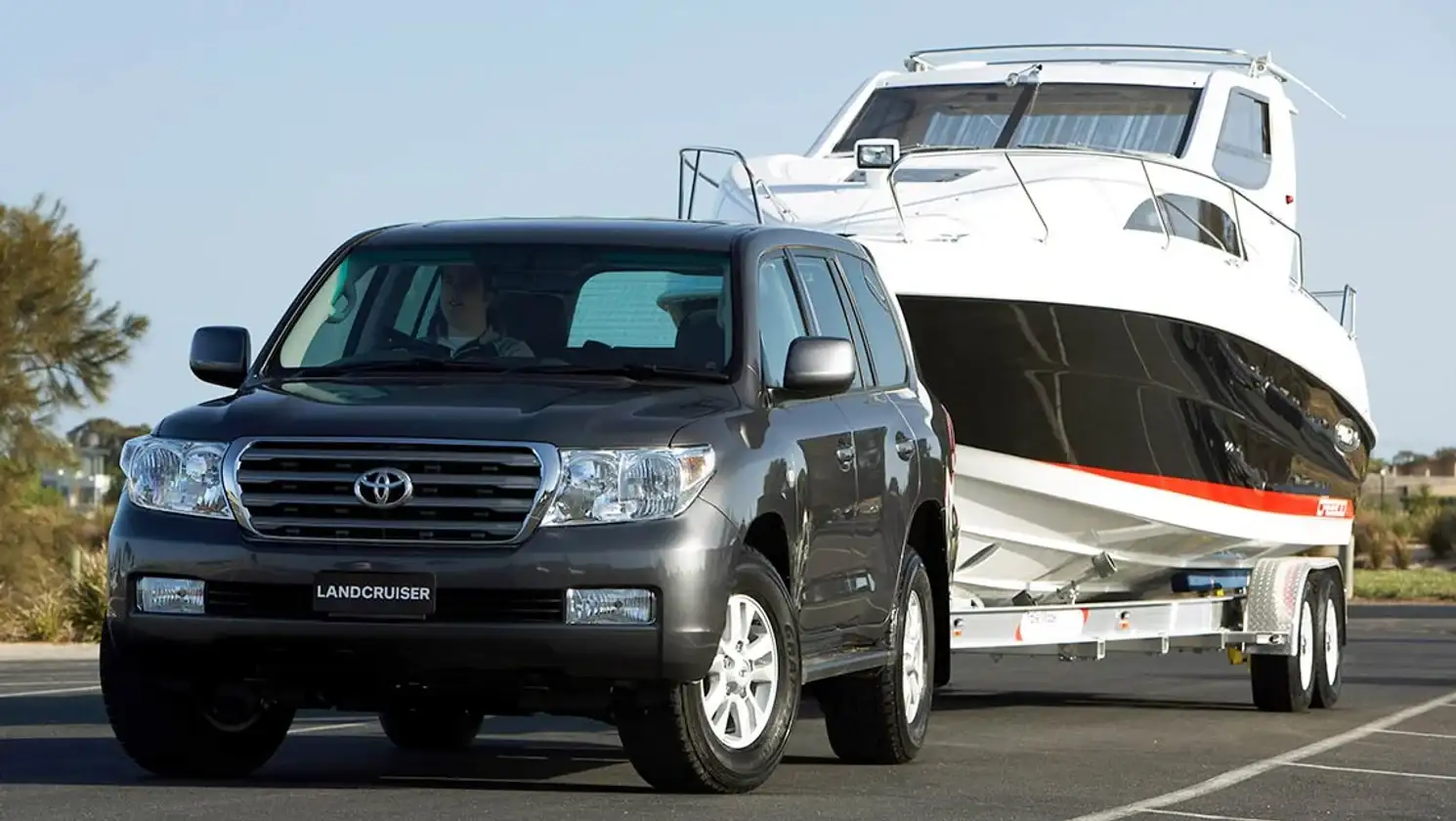
Both vehicles are body-on-frame SUVs and both are rated to tow up to 6,000 pounds when properly equipped, although the exact figure depends on the powertrain and trim, so your owner’s manual is the final word. The Land Cruiser pairs a turbocharged 2.4L hybrid powertrain with an 8-speed automatic and full-time four-wheel drive that includes a two-speed transfer case and a locking center differential. The 4Runner also uses an 8-speed automatic and offers a range of drivetrain choices, from rear-wheel drive with an automatic limited-slip differential to four-wheel drive with a two-speed transfer case.
That hardware is tough, but it still depends on clean fluid and proper adjustment to survive repeated heavy loads. Towing adds heat to every part of the drivetrain, and heat is the main enemy of transmission fluid, gear oil, and the clutch components inside a transfer case. The way to protect it is to treat towing as a reason to stay ahead of service.
Know Your Numbers Before You Hitch Up
A boat is heavier than most owners expect. The hull and motor are only part of the total, because the trailer, a full fuel tank, safety gear, coolers, and anything stored inside the boat all add up. The total weight of the loaded trailer must stay within your vehicle’s towing rating, and the weight pressing down on the hitch, called tongue weight, must stay within its limit as well.
Check your owner’s manual for the correct hitch and trailer wiring requirements, and make sure the trailer’s brakes, lights, and tires are in good shape. Use Tow/Haul mode if your vehicle has it, which holds lower gears longer and increases engine braking on descents. Slow, steady driving and extra following distance are your best tools on wet leaf-covered roads.
Drivetrain Checkpoints Before Haul-Out Season
A pre-season inspection by a trained technician covers the parts of the drivetrain that work hardest under a trailer. Here is what to have looked at:
- Transmission Fluid: Check its condition and level, since fluid that has broken down from heat cannot protect gears and clutches the way it should.
- Transfer Case Fluid: Make sure it is fresh and at the correct level, because the transfer case sends power to the front and rear axles every time you pull away with a heavy load.
- Front and Rear Differential Fluid: Heavy towing puts steady stress on the gears, and clean fluid helps prevent wear and overheating.
- Brakes and Rotors: Stopping a loaded trailer takes much more effort, so pads, rotors, and brake fluid should be in good condition.
In addition, confirm that the engine oil is fresh, the coolant level is correct, and the tires have healthy tread and proper pressure. Toyota’s maintenance guidance includes a more frequent schedule for vehicles that tow regularly, so it is worth reviewing your interval with a service professional.
The Hitch, Trailer Connection, and Brakes
The drivetrain is only part of a safe tow. The hitch receiver, ball mount, safety chains, and wiring connector should all be inspected for rust, cracks, and loose fasteners. Autumn moisture and road salt left over from the previous winter can corrode these parts quietly, so look closely before each haul.
If your boat trailer has its own brakes, test them before you head out. Make sure the connector is clean and the lights respond when you step on the pedal. A trailer with weak brakes pushes extra work onto your vehicle’s brakes and drivetrain, and that is the fastest way to overheat them on a long downhill run.
Driving Technique That Protects the Drivetrain
Smart habits make as much difference as maintenance. Accelerate smoothly, because sudden throttle puts shock load on the driveline. On long climbs, let the transmission hold a lower gear rather than forcing it to hunt between ratios, and use engine braking on descents so the brakes do not do all of the work. When you reach the storage lot, avoid sharp turns with a loaded trailer, which can strain the hitch and drivetrain at low speed.
After a long, hot haul, give the vehicle a short cool-down before you shut it off, and keep an eye on any warning lights or unusual smells. A hot, burning scent or a change in how the transmission shifts is a sign to stop and have the vehicle inspected, not a minor annoyance to ignore.
What Towing Prep Typically Costs
Pricing depends on the model, mileage, and services needed, so treat this as a general picture instead of a quote:
- Fluid Service: Transmission, transfer case, and differential service is a moderate cost that protects some of the most expensive parts of the vehicle.
- Brake Inspection and Service: A modest cost compared with the safety benefit of stopping confidently with a heavy trailer behind you.
- Hitch and Wiring Inspection: Usually inexpensive, and a smart way to catch corrosion or loose parts early.
- Tires and Alignment Check: A small investment that helps the vehicle track straight and wear evenly under load.
- Drivetrain Repair if Neglected: One of the largest repair bills a tow vehicle can face, and often the result of heat and worn fluid.
The online maintenance menu at Toyota Cleveland Heights is a handy way to see what services are available for your vehicle.
Be Ready for the Next Haul-Out
Autumn boating season is short, and the last thing you want is a breakdown with a boat on the trailer. A pre-haul drivetrain inspection, fresh fluids, and careful loading let your Land Cruiser or 4Runner do the work it was built for. If you want a professional to look over the transmission, transfer case, differentials, and brakes before the season ends, the service center at Toyota Cleveland Heights, located at 2950 Mayfield Rd, Cleveland Heights, OH 44118, United States is ready to help you tow with confidence.
0 comment(s) so far on Towing Autumn Boats: Drivetrain Service for the New Land Cruiser & 4Runner