

Toyota Highlander vs. Grand Highlander Maintenance Costs
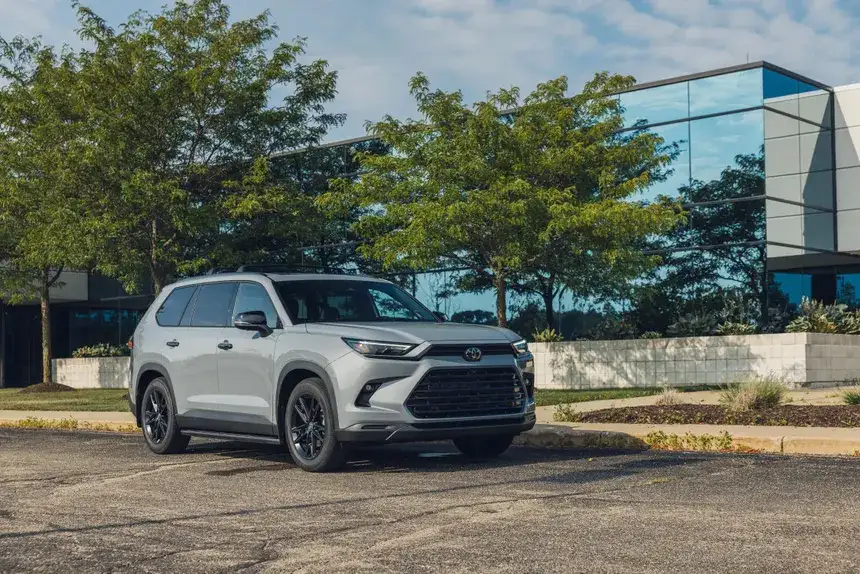
Last year, a Cleveland Heights family traded their 2021 Highlander for a new 2024 Grand Highlander to accommodate growing family needs, assuming maintenance costs would be nearly identical since both are Toyota SUVs with similar names. After the first year of Grand Highlander ownership, they discovered annual maintenance expenses had increased by approximately 30%. The Grand Highlander’s larger brakes required more expensive service ($850 versus $620 for the Highlander), the turbocharged engine used premium fuel adding $420 annually versus the Highlander’s regular fuel, larger tires cost $280 more per set, and the hybrid system (Grand Highlander Hybrid) added specialized service requirements totaling $180 every 15,000 miles. The pre-purchase consultation that would have explained these differences? Free.
Many Cleveland Heights area Toyota owners considering the transition from Highlander to Grand Highlander—or choosing between them for a new purchase—don’t realize these vehicles have measurably different maintenance requirements and operating costs despite their similar names and shared Toyota reliability. While both are excellent three-row SUVs, the Grand Highlander’s larger size, heavier weight, turbocharged engine option, and available hybrid powertrain create maintenance realities that differ from the established Highlander in specific, quantifiable ways.
Understanding these differences helps potential buyers make informed decisions, allows current owners to budget accurately, and prevents surprise maintenance bills that result when owners assume both vehicles cost the same to operate. The Grand Highlander isn’t necessarily more expensive to own overall—it provides more space, more power, and additional capability—but its maintenance reality deserves honest examination.
If you’re deciding between Highlander and Grand Highlander, own one and are considering switching to the other, or simply want to understand what your Toyota SUV actually costs to maintain, these detailed comparisons provide the transparency you need for smart ownership decisions.
Key Specification Differences
The Grand Highlander is substantially larger and heavier than the Highlander, creating the foundation for maintenance differences.
Size comparison: The Grand Highlander is 10.1 inches longer and 2.3 inches wider than the Highlander, with 13.2 cubic feet more maximum cargo space.
Weight difference: The Grand Highlander weighs 485-660 pounds more than comparable Highlander trims. This additional mass directly impacts brake wear rates, tire longevity, and suspension component stress.
Powertrain options: Both vehicles offer turbocharged four-cylinder and hybrid powertrains, but the Grand Highlander comes standard with all-wheel drive while the Highlander offers front-wheel drive on base models. The Grand Highlander Hybrid produces 362 hp combined versus 243 hp in the Highlander Hybrid, indicating a more powerful and complex system.
“Customers trading Highlanders for Grand Highlanders are often surprised by the maintenance cost differences,” says Robert Williams, Service Manager at our Mayfield Road location. “They assume since both are Toyota three-row SUVs, costs should be similar. But the Grand Highlander is substantially larger and heavier with more sophisticated systems. Brake service costs 25-30% more, tires cost more and wear faster, and the turbocharged models require premium fuel adding $400-500 annually. Over five years, these differences total $2,000-3,000 in additional operating costs. That doesn’t make the Grand Highlander a poor value—you’re getting significantly more vehicle—but owners should budget realistically.”
Routine Maintenance Cost Comparison
Here’s where the real ownership cost differences emerge.
Oil Changes
Oil change costs are similar between comparable models at $70-95 per service every 10,000 miles or 12 months. Both use 0W-16 synthetic oil meeting Toyota specifications. The hybrid models use slightly less oil (4.8 quarts versus 5.7 quarts), resulting in marginally lower costs.
Annual impact: Negligible difference—approximately $0-10 per year between comparable models.
Tire Service and Replacement
This is where costs begin diverging noticeably.
Highlander tires: $180-240 per tire, lasting 45,000-60,000 miles Grand Highlander tires: $220-280 per tire, lasting 40,000-55,000 miles
The Grand Highlander’s heavier weight accelerates tire wear by approximately 10-15% while the larger tire sizes cost $40-70 more per tire.
Five-year impact: Over 60,000 miles, expect to spend approximately $400-600 more on Grand Highlander tires compared to Highlander.
Brake Service
This represents the most significant maintenance cost difference between these vehicles.
Highlander brake service:
- Front pads and rotors: $450-620
- Rear pads and rotors: $380-540
- Front pad life: 40,000-55,000 miles (non-hybrid), 60,000-80,000 miles (hybrid)
Grand Highlander brake service:
- Front pads and rotors: $620-850
- Rear pads and rotors: $520-720
- Front pad life: 35,000-50,000 miles (non-hybrid), 55,000-75,000 miles (hybrid)
The Grand Highlander’s heavier weight causes brakes to wear 15-25% faster, and the larger brake components cost 30-40% more to replace.
Five-year impact: Over 60,000 miles, Grand Highlander owners should budget approximately $600-900 more for brake service than Highlander owners.
A nurse from Shaker Heights upgraded from a 2020 Highlander Hybrid to a 2024 Grand Highlander Hybrid for more cargo space. They were surprised when front brake service was needed at 52,000 miles versus the 72,000 miles they’d achieved with the Highlander Hybrid. The service also cost $750 versus $580 for the Highlander. Understanding the Grand Highlander’s heavier weight would affect brake life earlier would have helped them budget appropriately.
Hybrid System Service
Both hybrid models require similar maintenance: hybrid battery air filter replacement every 30,000 miles ($45-65), inverter coolant service at 100,000 miles ($180-220), and periodic 12-volt auxiliary battery replacement ($175-220).
The Grand Highlander Hybrid’s more powerful system includes additional cooling requirements, adding approximately $95-125 every 30,000 miles versus the standard Highlander Hybrid.
Five-year impact: Grand Highlander Hybrid owners pay approximately $190-250 more for hybrid system maintenance over 60,000 miles.
Fuel Cost Differences
While not strictly maintenance, fuel costs significantly impact total ownership expenses.
Fuel Economy Comparison
Highlander 2.4L Turbo (AWD): 22 city / 28 highway / 24 combined MPG (premium fuel recommended) Highlander Hybrid (AWD): 36 city / 35 highway / 36 combined MPG (regular fuel)
Grand Highlander 2.4L Turbo (AWD): 21 city / 26 highway / 23 combined MPG (premium fuel recommended) Grand Highlander Hybrid (AWD): 35 city / 34 highway / 35 combined MPG (regular fuel)
Five-Year Fuel Costs (60,000 miles)
Highlander Turbo: 2,500 gallons × $4.00 (premium) = $10,000 Highlander Hybrid: 1,667 gallons × $3.50 (regular) = $5,835 Grand Highlander Turbo: 2,609 gallons × $4.00 (premium) = $10,436 Grand Highlander Hybrid: 1,714 gallons × $3.50 (regular) = $6,000
Additional fuel costs for Grand Highlander:
- Turbo models: $436 more over five years
- Hybrid models: $165 more over five years
Combined with maintenance differences, turbocharged Grand Highlander ownership costs approximately $3,000-3,500 more over five years than comparable Highlander models in maintenance and fuel.
Long-Term Ownership Cost Summary
Understanding total five-year costs helps with vehicle selection and budgeting.
Five-Year/60,000-Mile Maintenance Comparison
Highlander (Non-Hybrid):
- Oil changes: $450-570
- Tire rotations: $300-390
- Tire replacement (1 set): $720-960
- Front brake service: $450-620
- Transmission service: $280-365
- Other services: $400-550
- Total: $2,600-3,455
Highlander Hybrid:
- Oil changes: $420-540
- Tire rotations: $300-390
- Tire replacement (1 set): $720-960
- Front brake service: $450-620 (later interval)
- Hybrid system service: $280-380
- Transmission service: $280-365
- Other services: $400-550
- Total: $2,850-3,805
Grand Highlander (Non-Hybrid):
- Oil changes: $450-570
- Tire rotations: $300-390
- Tire replacement (1 set): $880-1,120
- Front brake service: $620-850
- Rear brake service: $520-720 (likely needed)
- Transmission service: $280-365
- Other services: $400-550
- Total: $3,450-4,565
Grand Highlander Hybrid:
- Oil changes: $420-540
- Tire rotations: $300-390
- Tire replacement (1 set): $880-1,120
- Front brake service: $620-850
- Hybrid system service: $470-630 (additional cooling)
- Transmission service: $280-365
- Other services: $400-550
- Total: $3,370-4,445
Maintenance Cost Difference Summary
Over five years and 60,000 miles:
- Grand Highlander (Non-Hybrid) versus Highlander (Non-Hybrid): $850-1,110 more
- Grand Highlander Hybrid versus Highlander Hybrid: $520-640 more
Combined with fuel costs:
- Grand Highlander Turbo total additional cost: $1,286-1,546
- Grand Highlander Hybrid total additional cost: $685-805
The additional $130-260 annually for Grand Highlander ownership provides substantially more interior space, cargo capacity, and physical presence.
Which Vehicle Makes Sense for You?
The choice depends on needs beyond just maintenance costs.
Choose Highlander If:
Family size and cargo needs fit comfortably within the Highlander’s dimensions. Most families of 4-5 with typical cargo requirements find the Highlander’s 84.3 cubic feet of maximum cargo space adequate.
Budget sensitivity makes the lower purchase price and operating costs priorities. The Highlander starts approximately $4,000-6,000 less than comparable Grand Highlander trims and costs $685-1,546 less to operate over five years.
Fuel economy is a priority and you’re considering turbocharged models. The Highlander achieves slightly better MPG than the Grand Highlander.
Easier parking and maneuvering matter for urban and suburban driving. The Highlander’s 10-inch shorter length makes it noticeably easier to park in tight spaces.
Choose Grand Highlander If:
Maximum cargo space is essential for regular use. The Grand Highlander’s 97.5 cubic feet provides 13.2 cubic feet more maximum cargo than the Highlander.
You regularly carry seven passengers and need more comfortable third-row space. The Grand Highlander’s additional length provides noticeably more third-row legroom.
You value the more commanding road presence and upscale interior materials. The Grand Highlander feels more substantial and premium than the Highlander.
The hybrid model appeals and you want maximum power. The Grand Highlander Hybrid’s 362 hp versus Highlander Hybrid’s 243 hp provides significantly stronger acceleration.
You’re comfortable with approximately $15-25 per month in additional operating costs for the larger vehicle’s benefits.
Schedule Your Service or Consultation Today
That Cleveland Heights family who traded their Highlander for a Grand Highlander now understands the maintenance differences and budgets accordingly. While their annual costs increased by $260-310, they gained the cargo space and third-row comfort their growing family needed. Understanding the differences from the beginning would have prevented surprise bills, but they’re happy with their Grand Highlander and maintain it properly knowing what to expect.
Whether you own a Highlander, own a Grand Highlander, or are deciding between them, understanding the real maintenance differences helps you make informed decisions and budget appropriately. Both are excellent vehicles with different maintenance realities matching their different capabilities.
Our certified Toyota technicians at 2950 Mayfield Road service both Highlander and Grand Highlander models daily and understand the specific maintenance needs of each vehicle. We can answer questions about costs, help you budget for upcoming service, and ensure your Toyota receives proper care.
Schedule your Highlander or Grand Highlander service today, or schedule a consultation if you’re deciding between vehicles, by calling our service department or booking online at Toyota Cleveland Heights, 2950 Mayfield Rd, Cleveland Heights, OH 44118. We’ll provide transparent information about maintenance needs and costs so you can make informed decisions.
Understanding maintenance differences helps you choose the right vehicle for your needs and budget appropriately for ownership. That’s the value transparent service information delivers.
0 comment(s) so far on Toyota Highlander vs. Grand Highlander Maintenance Costs