

The 2026 4Runner Trailhunter: First Service Expectations
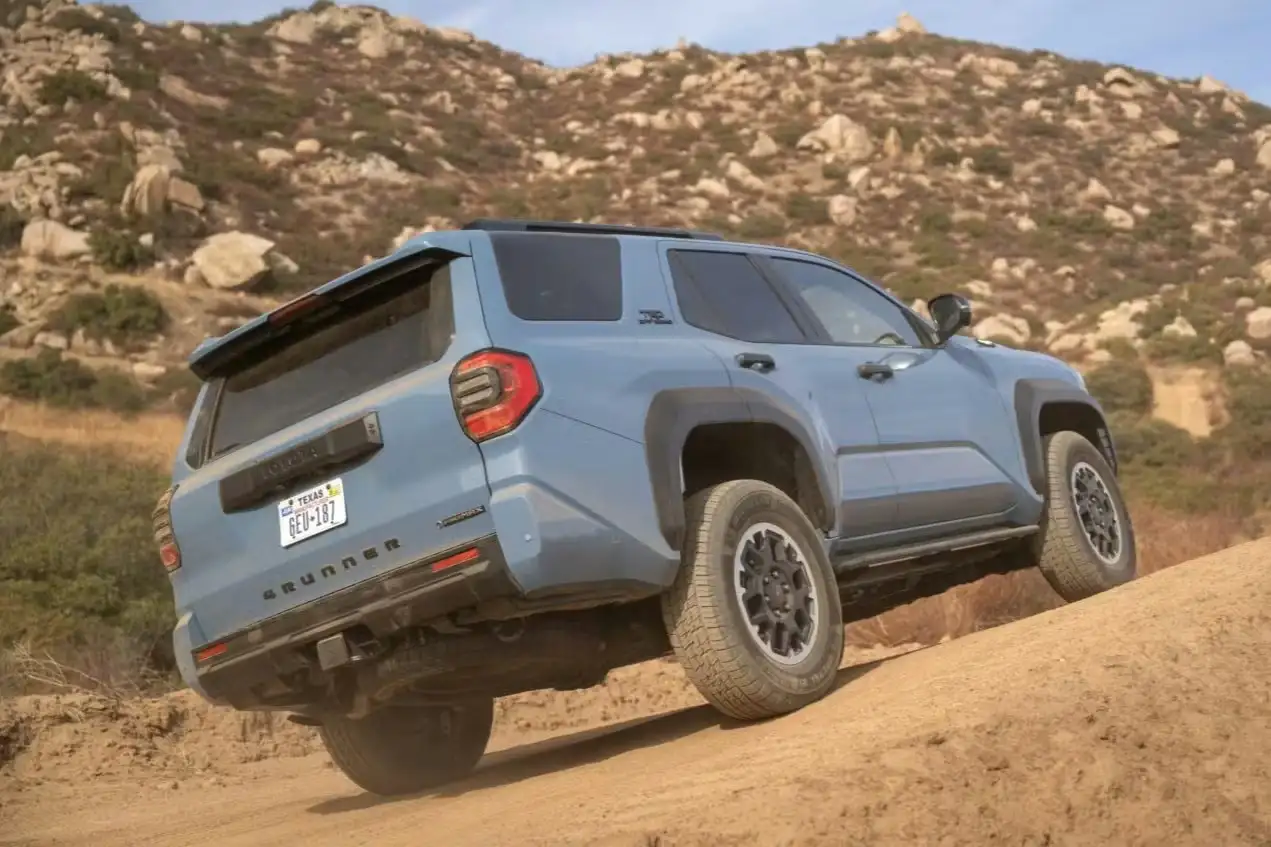
Last month, a 2026 4Runner Trailhunter came into our service bay with only 6,200 miles on the odometer. The owner had pushed past the first recommended service interval, assuming the new vehicle smell meant nothing needed attention yet. After inspecting the undercarriage following several trail runs through the Cuyahoga Valley and a few muddy weekends near Chardon, we found compromised differential fluid, a clogged skid plate drain, and early signs of brake dust contamination in the rear drums. Addressing everything at that stage cost $680. Had he come in at the recommended interval, the first service would have run $195.
The 2026 4Runner Trailhunter is one of the most capable factory off-road vehicles Toyota has ever produced. It leaves the lot with a factory-installed Old Man Emu suspension lift, a locking rear differential, reinforced skid plates, and an off-road-tuned KDSS system that most buyers spend thousands adding to standard 4Runners after purchase. For drivers in the Cleveland Heights area who use Mayfield Road as a launching point toward the Metroparks, the Cuyahoga Valley trails, or longer runs east toward the Geauga County back roads, this is a vehicle that invites serious use from day one.
That capability comes with a specific set of first service expectations that differ meaningfully from a standard 4Runner or a typical Toyota sedan. The Trailhunter’s systems are designed to work hard, and the first service interval is when a trained technician confirms they survived break-in in the condition they need to be in for the next 50,000 miles. At Toyota Cleveland Heights, we want every Trailhunter owner to walk into that first appointment knowing exactly what to expect and why it matters.
What Makes the Trailhunter’s First Service Different
Most new vehicle first services are straightforward: an oil change, a multi-point inspection, and a tire rotation. The 2026 Trailhunter’s first service is more involved because the vehicle has systems that standard 4Runners don’t carry, and those systems have their own break-in characteristics and inspection requirements.
The factory-filled differential fluids, both front and rear, go through a break-in period during the first several thousand miles where metal-to-metal contact between new gear surfaces introduces fine metallic particles into the fluid. This is normal and expected, but it means the fluid that comes out at the first service looks nothing like what went in. Leaving that contaminated fluid in place past the first service interval allows those particles to circulate through the differential bearings, which accelerates wear at exactly the point in the vehicle’s life when the components are still seating properly.
The transfer case fluid goes through a similar process. The Trailhunter’s electronically controlled locking systems depend on clean fluid to operate the clutch packs that engage four-wheel drive and the rear locker. Contaminated fluid from break-in affects shift quality and response in ways that become permanent if left unaddressed.
What the First Service Inspection Covers 🔧
Beyond the fluid services, the Trailhunter’s first appointment covers a set of inspections specific to its off-road equipment. Here is what our technicians go through at Toyota Cleveland Heights:
- Skid plate and underbody inspection: The Trailhunter’s steel skid plates protect the oil pan, transfer case, and fuel tank, but they also trap debris. The first service clears accumulated material and checks for impact damage from break-in trail use.
- Suspension component torque check: The Old Man Emu lift components are re-torqued after the initial settle-in period. Fasteners that were correct at the factory can back off slightly as bushings compress under load, and a torque check at the first service catches that before it becomes a handling issue.
- Brake inspection with trail use consideration: If the vehicle has seen off-road use before the first service, the brake inspection includes checking for mud and debris packing behind the rotors and around the rear drum components.
- Tire rotation and pressure verification: The Trailhunter’s all-terrain tires wear differently than standard highway tires, and the first rotation establishes the pattern that extends their usable life across Ohio’s variable road surfaces.
What Cleveland Heights Winters Do Before the First Service
The Trailhunter’s first service window often lands right in the middle of an Ohio winter, and northeast Ohio winters are not gentle on a new vehicle’s undercarriage. Road salt on Mayfield Road, Cedar Road, and the I-271 interchange gets into every crevice of a vehicle’s underbody, and the Trailhunter’s additional off-road hardware gives it more surface area for that salt to accumulate on than a standard SUV.
This matters for the first service because our technicians can identify early corrosion points on brake lines, suspension hardware, and the skid plate mounting brackets before they develop into something structural. A new Trailhunter that has spent its first winter on Cleveland Heights roads and its first weekends on wet trails in the Cuyahoga Valley needs that undercarriage looked at by someone who knows what early salt damage looks like on this specific platform.
What First Service Costs vs. What Deferred Service Costs 💰
The math on the Trailhunter’s first service is straightforward:
- First service completed on schedule: $175 to $220
- Differential fluid replacement (both axles): $180 to $260
- Transfer case fluid service: $120 to $180
- Suspension re-torque after deferred service: $95 to $140
- Brake cleaning and debris removal (trail use): $85 to $130
First service on time: $175 to $220 covers everything
First service deferred past interval: $480 to $730 once compounded fluid contamination and suspension issues are addressed separately
The Trailhunter is a significant investment. The first service is the lowest-cost, highest-return maintenance event in the vehicle’s entire life.
A Trail Runner Who Waited Too Long
A Trailhunter owner from University Heights came in last winter after putting 8,500 miles on his truck, mostly split between daily driving on South Taylor Road and two trail runs in the Metroparks. He had assumed the dealer inspection at purchase covered him for the first service. It doesn’t. When we pulled the rear differential fluid, it had turned dark gray from break-in metallic contamination and smelled of heat. The front differential was in similar condition. Both fluids were replaced, the transfer case was serviced, and the suspension received a full torque check. Total cost: $580. His first scheduled service, completed on time, would have been $195.
Warning Signs Your Trailhunter Needs Attention Before the First Service
Most owners won’t hit any of these before the first interval, but trail use accelerates wear in ways that highway driving doesn’t. Watch for these:
Grinding or resistance when engaging four-wheel drive: Clean transfer case fluid allows smooth engagement. If the shift feels notchy or slow, the fluid may have degraded faster than expected from heavy early use.
Rear locker warning light or slow engagement: The electronic rear locker depends on clean differential fluid to operate the clutch pack. Contaminated fluid can cause hesitation or warning lights before the standard service interval on a heavily used truck.
Vibration at highway speed after trail use: If the Trailhunter develops a vibration on I-271 or US-322 after a trail run, mud or debris packed in the wheel wells or around the driveshaft may be the cause, and it warrants an early inspection.
Suspension noise over bumps on surface streets: The Old Man Emu components are robust, but a loose fastener from the break-in period can produce a creak or knock over the expansion joints on Mayfield Road that wasn’t there at delivery.
Unusual differential whine under load: A faint whine when accelerating from a stop, especially in four-wheel drive, can indicate the differential gears are running in fluid that has become too contaminated from break-in to provide adequate lubrication.
What Our Service Team Says
“People buy the Trailhunter because they want to use it hard, and we love that. But the first service is not optional on this platform. The differential fluids come out looking completely different than they went in, and that’s by design, but they have to come out on schedule. I’d rather spend twenty minutes explaining that to a new owner than spend two hours replacing differential bearings at 40,000 miles because the break-in fluid never got changed.” — Brian Kowalski, Lead Service Technician, Toyota Cleveland Heights
When Early Action Protected a Major Investment
Sandra bought her Trailhunter specifically for weekend runs on the trails off Chagrin River Road in Geauga County. She came in at 5,800 miles, slightly ahead of the recommended first service interval, because she had used the truck hard on three separate trail days and wanted confirmation everything was holding up. Smart call. We found the rear differential fluid heavily contaminated from the combined trail use, the skid plate drain partially blocked with packed mud, and one suspension fastener that had backed off slightly from the break-in compression. Everything was corrected at the first service for $210. None of those issues would have announced themselves before causing real damage.
Your 30-Day Trailhunter First Service Plan
This week, locate your 2026 4Runner Trailhunter’s maintenance schedule in the owner’s manual or the Toyota app and confirm exactly when the first service interval falls based on your current mileage. If you’ve been using the truck for trail runs in addition to daily driving on Cleveland Heights roads, note that off-road use counts more heavily against service intervals than highway miles. A truck that has seen three trail days and 4,000 road miles is not in the same condition as one with 4,000 pure highway miles.
Within two weeks, do a visual walk-around of the undercarriage if the truck has seen any trail or wet-road use. You’re not looking for anything specific, just noting whether there is packed mud around the skid plates, debris near the rear differential housing, or anything that looks like it doesn’t belong. If anything stands out, mention it when you schedule your first service so our technicians can prioritize that area.
By month’s end, get the first service scheduled at Toyota Cleveland Heights if you’re within 1,000 miles of the recommended interval. Don’t let a busy stretch of work or a good trail weekend push it past the window. These three steps take less than an hour total but protect a vehicle that costs significantly more to repair than to maintain.
Schedule Your 2026 Trailhunter First Service at Toyota Cleveland Heights
The owner who came in at 6,200 miles with $680 worth of deferred service issues learned his lesson and has been on schedule ever since. His Trailhunter is now well past 20,000 miles and holding up exactly as it should. The first service is the foundation everything after it is built on, and there is no better time to establish a relationship with a service team that knows this platform than at that first appointment.
Our technicians at Toyota Cleveland Heights are trained on the 2026 4Runner Trailhunter’s specific systems and equipped to handle everything from the differential fluid services to the suspension torque verification the platform requires. We’re not treating it like a standard oil change visit because it isn’t one.
Visit us at Toyota Cleveland Heights, located at 2950 Mayfield Rd, Cleveland Heights, OH 44118. Our service department is open Monday through Saturday. Schedule online through our website or call our service desk to book your first appointment. We serve drivers from Cleveland Heights, University Heights, South Euclid, Lyndhurst, and throughout Cuyahoga County. Your Trailhunter was built to go anywhere. Let’s make sure it stays that way. 🏔️
0 comment(s) so far on The 2026 4Runner Trailhunter: First Service Expectations