

The 2026 4Runner Trailhunter: Preparing Toyota’s most anticipated off-roader for Ohio’s rugged backroads
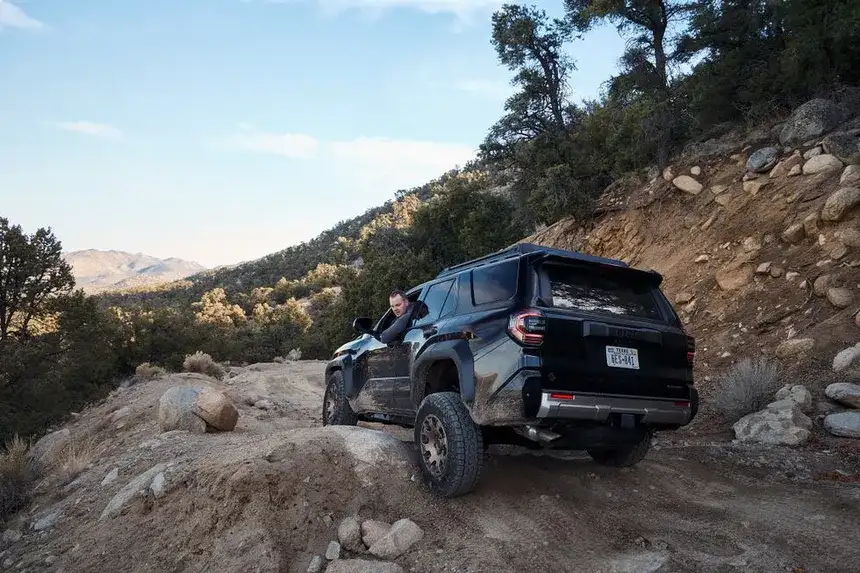
Last month, a 2026 4Runner Trailhunter came in from Willoughby after its owner had spent the winter running the vehicle through the muddy two-tracks at Mohican State Forest and the rocky access roads around East Fork State Park without scheduling a single service appointment since October delivery. He had reasoned that a purpose-built off-road platform with factory skid plates and an ARB Old Man Emu suspension should handle Ohio winter use without immediate service attention. When our technician completed the inspection, the front differential had water contamination from two stream crossings in February, the underbody protection mounting hardware had loosened significantly from trail vibration, and the KDSS hydraulic suspension system showed fluid level reduction from a fitting that had been weeping since a particularly aggressive rock crawl in January. The pre-season inspection and differential service that would have caught all three items before the winter trail season began? $580. The differential flush with contamination inspection, hardware re-torque, and KDSS fluid service and leak diagnosis required by March? $1,340.
That $760 gap between preparation and catch-up is the version of a 4Runner story we hear most consistently at Toyota Cleveland Heights every spring from Trailhunter owners who trusted the platform’s capability without building the maintenance foundation that off-road capability requires. The Trailhunter is the most purpose-built 4Runner Toyota has ever offered in the North American market, and its factory-installed overlanding equipment raises the capability ceiling considerably above previous 4Runner generations. That same equipment raises the maintenance complexity proportionally, and Ohio’s specific combination of trail conditions, seasonal weather, and backroad terrain creates a service picture that Trailhunter owners in the Cleveland Heights and Greater Cleveland area need to understand from the beginning of ownership.
This guide covers what makes the 2026 4Runner Trailhunter different from a standard 4Runner from a service perspective, what Ohio’s off-road environment specifically demands from the Trailhunter platform, and how to build the preparation and maintenance plan that keeps this vehicle performing at the standard Toyota engineered it to deliver on every Ohio trail ahead.
What Makes the 2026 4Runner Trailhunter Different to Service
The Trailhunter designation represents Toyota’s factory-built overlanding package, and it goes significantly beyond the appearance packages and mild off-road upgrades that characterize most manufacturer trim-level differentiation. Understanding what has been added to the standard 4Runner platform and what those additions mean for service requirements is the foundation for responsible Trailhunter ownership in Ohio’s trail environment.
The Trailhunter arrives from the factory with an ARB Old Man Emu suspension system that replaces the standard 4Runner’s suspension with coilover front struts and rear shocks specifically tuned for loaded overlanding use and off-road articulation. The suspension tuning delivers genuinely superior off-road geometry compared to the standard 4Runner, but ARB’s components have their own service requirements, including shock fluid condition monitoring and bushing inspection intervals, that differ from Toyota’s standard suspension service schedule.
The factory-installed ARB front bumper and integrated air compressor, the underbody protection package covering the front differential, transfer case, and fuel tank, and the roof rack structure all add structural hardware to the vehicle that requires its own inspection cadence. Hardware that loosens from trail vibration, mounting points that corrode from Ohio’s salt and moisture environment, and protective components that absorb impact damage all require dedicated attention that a standard 4Runner service doesn’t address.
The KDSS, or Kinetic Dynamic Suspension System, available on Trailhunter configurations is a hydraulic suspension interconnection system that actively manages the anti-roll bar engagement between on-road and off-road modes. It’s one of the more sophisticated suspension technologies on any production 4Runner, and it uses hydraulic fluid under pressure to perform its function. That hydraulic system has fluid condition requirements, pressure specifications, and fitting integrity needs that represent a service category with no equivalent on standard 4Runner models.
The New Platform Architecture and What It Means for Ohio Owners
The 2026 4Runner’s underlying platform update brings significant structural and drivetrain changes compared to the previous generation, and the Trailhunter’s additional equipment sits on top of this revised foundation. The updated platform carries a revised independent front suspension geometry on standard models, but the Trailhunter’s ARB conversion modifies this geometry for off-road optimization in ways that create specific alignment characteristics worth understanding before the first alignment check.
The Trailhunter’s alignment specification differs from a standard 4Runner’s because the ARB suspension geometry is optimized for off-road articulation rather than on-road tire wear optimization. Cleveland Heights and Greater Cleveland Trailhunter owners who use their vehicles for a mix of trail driving and daily road use on Mayfield Road, Cedar Road, and the I-271 corridor need to understand that their alignment expectations and tire wear patterns will differ from a standard 4Runner’s, and that the spring alignment check after an Ohio trail season should be performed by technicians familiar with the ARB suspension geometry rather than against standard 4Runner specifications. 🔧
What Ohio’s Off-Road Environment Does to the Trailhunter Platform
Ohio’s trail environment is distinct from the desert or mountain terrain that most overlanding content is built around, and the Trailhunter’s preparation for Ohio specifically differs from what a Colorado or Arizona Trailhunter owner needs to prioritize. Understanding the specific stresses that Ohio trails deliver to the Trailhunter platform is the starting point for building a relevant service and preparation plan.
Water and mud are Ohio’s defining off-road conditions. The trails at Mohican State Forest, the Hocking Hills area, Tar Hollow State Forest, and the creek-crossing access roads throughout Coshocton and Muskingum County that Greater Cleveland Trailhunter owners access within a two-hour drive deliver mud, standing water, and stream crossings that expose the drivetrain, electrical systems, and underbody hardware to submersion conditions at a frequency that desert and dry-climate off-road use simply doesn’t produce.
The Trailhunter’s factory underbody protection is designed to manage rock and debris impacts, and it performs that function effectively. Water infiltration during crossings is a different challenge that the protection hardware addresses only partially. The front differential, transfer case, and rear differential all have vent systems that prevent hydraulic lock during operation but that allow moisture ingress when the vehicle is submerged or operated in sustained deep water. An Ohio trail season that involves regular stream crossings accumulates moisture in drivetrain fluid over time in a way that mileage-based service intervals don’t capture.
The Mud and Clay Factor on Northeast Ohio Trails
The specific soil composition of Northeast Ohio trail systems, where the glacial clay soils of the region create a dense, adhesive mud that packs into wheel wells, underbody components, and brake hardware with a persistence that sandy or loose-soil mud doesn’t match, creates maintenance considerations specific to this region’s trail use.
Clay-packed mud that freezes overnight and then thaws creates expansion and contraction forces in the packed areas that stress the fasteners, mounting hardware, and flexible components it’s pressed against. Brake components packed with frozen clay mud have their thermal dissipation affected in ways that trail braking performance reflects. And the suspension articulation components, the CV boots, ball joint seals, and bushing interfaces that flex continuously during trail use, are exposed to abrasive clay infiltration at a rate that accelerates wear on components that depend on clean, sealed lubrication.
A Trailhunter owner from Solon came in last fall after noticing a clicking sound on low-speed trail turns at Mohican that had developed over the summer season. Inspection found clay infiltration through a cracked front CV boot that had been allowing the abrasive material into the CV joint through a full summer of Mohican trail use. The joint had developed enough wear from the contamination to produce the clicking on full-lock turns. CV joint and boot replacement at the crack discovery point in late spring would have cost $280. The full front CV axle replacement required after a summer of clay contamination ran $640.
The Trailhunter Pre-Season Preparation Protocol
For Cleveland Heights area Trailhunter owners, the most effective approach to Ohio trail season is a dedicated pre-season preparation appointment that establishes the vehicle’s mechanical baseline before the trail use season begins rather than assessing damage after the season ends. The preparation appointment differs from a standard service visit in its scope and focus, addressing the Trailhunter-specific systems alongside the standard service items.
Drivetrain Fluid Assessment
The front differential, rear differential, and transfer case fluid condition should be assessed before the trail season opens each spring and after any significant water crossing events through the season. The Trailhunter’s factory-recommended fluid service intervals apply to on-road use, and Ohio trail use, particularly the stream crossings and sustained mud driving that Mohican and Hocking Hills deliver, qualifies as severe service that warrants more frequent assessment.
Toyota specifies differential fluid replacement at 30,000 miles under normal conditions, but a Trailhunter that has completed ten stream crossings in a single Mohican weekend should have its front differential fluid inspected for water contamination regardless of mileage. Contaminated differential fluid is identifiable by its milky or gray appearance when compared to clean fluid, and the inspection takes minutes at a service appointment. The fluid replacement costs $165 to $195 per differential and protects components that would cost $1,800 to $3,200 to replace if contamination-driven wear progresses to failure.
ARB Suspension Inspection
The ARB Old Man Emu suspension components should be inspected annually for shock condition, bushing integrity, and mounting hardware torque. The shock absorbers on the OME system use a different valving and fluid specification than Toyota’s standard shocks, and their performance degradation signature differs from a standard shock’s wear pattern.
A shock absorber that has lost damping capacity on the OME system affects the Trailhunter’s off-road articulation and body control in ways that the driver may attribute to trail difficulty rather than suspension condition. An OME shock inspection that confirms adequate damping performance and correct ride height gives a clear picture of suspension health that the driver’s subjective assessment of trail performance can’t reliably provide.
KDSS System Health
The KDSS hydraulic system’s fluid level, pressure, and fitting integrity should be confirmed at each annual inspection. A KDSS system that has developed a slow leak, as the Willoughby Trailhunter owner discovered, continues functioning at reduced performance before eventually exhibiting the handling asymmetry that a low hydraulic pressure condition produces on one side of the vehicle.
KDSS fluid service and leak inspection at our Mayfield Road location runs $180 to $240 and provides complete confirmation of system integrity before the trail season places maximum demand on the hydraulic interconnection function the system performs.
Cost comparison for proactive Trailhunter preparation vs. reactive repair:
Proactive annual pre-season preparation:
- Front and rear differential fluid assessment and service: $330 to $390
- Transfer case fluid inspection and service: $120 to $160
- ARB suspension inspection with bushing and mount assessment: $180 to $240
- KDSS fluid check and fitting inspection: $180 to $240
- Underbody protection hardware torque check: $60 to $80
- Smart proactive total: $870 to $1,110
Reactive approach after a full Ohio trail season without preparation:
- Front differential flush after water contamination: $280 to $380
- CV axle replacement after clay infiltration through cracked boot: $480 to $640
- KDSS leak repair and fluid service after fitting failure: $480 to $680
- ARB bushing replacement after unseated bushing causes handling instability: $420 to $580
- Total reactive cost: $1,660 to $2,280
Your savings from proactive annual preparation: $550 to $1,170, with the additional value of entering every Ohio trail season knowing exactly what condition your Trailhunter’s most critical systems are in.
Warning Signs Your Trailhunter Needs Attention Between Seasons
These symptoms on the 2026 4Runner Trailhunter warrant a service appointment rather than continued trail use, because the Trailhunter’s capability can mask the early stages of component degradation in ways that a less capable vehicle would communicate more urgently.
Milky or gray-tinted differential fluid visible when checking the fluid condition indicates water contamination that requires immediate fluid replacement before the contamination accelerates gear and bearing wear. This inspection takes two minutes and should be performed after any stream crossing deeper than the vehicle’s rated depth.
A change in KDSS handling character, specifically a difference in the way the front and rear ends respond to body roll inputs on trail or on road that wasn’t present previously, indicates a hydraulic pressure imbalance from a slow leak that warrants inspection before trail use compounds the pressure differential.
Clicking or grinding on full-lock turns at low speed indicates CV joint wear from boot compromise and contamination infiltration. This symptom on an Ohio trail vehicle almost always traces to clay mud infiltration through a compromised boot seal rather than normal wear-related degradation.
ARB bumper or skid plate mounting movement visible when pressing against the component by hand indicates loosened mounting hardware from trail vibration that should be re-torqued before the next trail session to prevent the mounting stress from damaging the chassis attachment points.
Underbody protection components that have developed visible impact deformation from rock or stump contact should be inspected to confirm the deformation hasn’t compromised the protection’s integrity or created contact with the component it’s protecting. 🔧
Roof rack mounting point movement under load indicates fastener loosening from trail vibration that affects the structural integrity of any equipment carried on the rack during trail use.
“The Trailhunter is the most capable production 4Runner Toyota has built, and the Ohio trail system gives it genuine purpose,” says Daniel Kowalski, Master Toyota Off-Road Technician at the Mayfield Road location. “What I tell every new Trailhunter owner is that capability and durability are different things. This vehicle will take you places that would stop most SUVs without complaint. But the drivetrain, the KDSS, and the ARB components that make that capability possible need the specific attention that Ohio trail use demands. A pre-season preparation appointment is the investment that keeps the capability intact through every season of Ohio off-road use ahead.”
Your 30-Day Trailhunter Preparation Plan
This week: Do a complete visual underbody inspection with the vehicle on level ground, either by lying beneath it or using a phone camera to photograph the skid plates, CV boots, and differential vent locations. Look specifically for clay mud packing in the CV boot area that could indicate a compromised seal, any visible weeping of fluid at the KDSS fittings along the front axle area, and skid plate mounting hardware that shows corrosion or visible looseness. These observations take 15 minutes and give you a current condition baseline that makes the pre-season service conversation specific rather than general.
Within two weeks: Check all drivetrain fluid levels and condition if your Trailhunter has completed any water crossing or sustained mud driving since its last service. The front differential is the most accessible starting point. Remove the fill plug and assess fluid color and odor. Clean fluid is amber to light brown and has a mild gear oil odor. Contaminated fluid is gray, milky, or unusually thin in consistency and has a distinctly different odor that experienced trail drivers recognize quickly. If any fluid shows contamination signs, schedule the differential service before the next trail outing regardless of mileage.
By month’s end: Schedule your pre-season Trailhunter preparation appointment at the Mayfield Road location and ask specifically for the Trailhunter protocol rather than a standard 4Runner service. Our Toyota-certified technicians with off-road platform experience will complete the drivetrain fluid assessment, ARB suspension inspection, KDSS system check, underbody hardware torque verification, and a road and articulation test that confirms the vehicle’s dynamic behavior matches its documented component condition. Completing this appointment before the spring Ohio trail season opens at Mohican and Hocking Hills ensures your Trailhunter enters the highest-use period of the year with a confirmed and documented mechanical foundation.
These three steps take less than two hours of your actual time outside the service appointment and create the preparation infrastructure that separates a Trailhunter that delivers its designed capability reliably across every Ohio trail season from one that discovers its maintenance needs through a mid-trail breakdown on a Coshocton County forest road.
The 2026 4Runner Trailhunter is the most trail-capable vehicle Toyota Cleveland Heights has ever sold, and Northeast Ohio’s trail system is genuinely worthy of what it offers. Mohican State Forest, Hocking Hills, Tar Hollow, and the creek-crossing two-tracks throughout the region give the Trailhunter’s ARB suspension, KDSS system, and factory overlanding package genuine purpose across every season. Protecting that capability through a preparation and maintenance approach built around Ohio’s specific trail conditions is what keeps the Trailhunter delivering on its promise mile after Ohio mile.
Schedule Your Trailhunter Pre-Season Preparation Today
The Willoughby 4Runner owner from the opening had his differential flushed, his KDSS leak diagnosed and repaired, and his underbody hardware re-torqued in a single appointment at our Mayfield Road location. He set a pre-season preparation appointment for every October going forward, specifically to assess what the summer trail season had produced before winter storage and to establish a clean baseline before the spring season begins. His Trailhunter has not surprised him with a trail-season repair bill since.
At Toyota Cleveland Heights, our Toyota-certified technicians service the 2026 4Runner Trailhunter with the off-road platform knowledge, ARB suspension familiarity, and KDSS service capability that this vehicle’s factory-installed equipment requires. Whether you’re preparing for your first Ohio trail season, recovering from a winter of active use, or simply want a comprehensive assessment of your Trailhunter’s current condition, we’ll give you an honest evaluation and a preparation plan built around what Ohio trails actually demand.
Schedule your Trailhunter pre-season preparation today by contacting our service department or booking online. You’ll find us at 2950 Mayfield Rd, Cleveland Heights, OH 44118.
Proper Trailhunter preparation protects the factory overlanding investment that defines this generation of the 4Runner, preserves the drivetrain and suspension capability that Ohio’s trail system demands, and ensures every backroad, creek crossing, and forest service track ahead is approached with a vehicle that has been given exactly what it needs to perform at the standard Toyota’s most capable 4Runner was built to deliver. That is what dedicated off-road preparation looks like.
0 comment(s) so far on The 2026 4Runner Trailhunter: Preparing Toyota’s most anticipated off-roader for Ohio’s rugged backroads